
Lenten Devotions in the Home (Guest: Suzan Sammons)
Eric Sammons is joined by his wife Suzan to talk about growing up as a cradle Catholic, how they met, and her new book on Lent.


Eric Sammons is joined by his wife Suzan to talk about growing up as a cradle Catholic, how they met, and her new book on Lent.

The reputation of “Science” is in tatters for many people, leading some to question things that were previously assumed by just about everyone. What is the proper Catholic approach to evaluating the claims of scientists?

Since its inception in the 19th century, Communism has always been at war with the Catholic Church. We’ll discuss at why that is, and look to some heroic examples of Catholics who resisted the atheistic system.

Crisis Editor Eric Sammons recently wrote an article arguing that Catholics should consider not voting in the 2024 presidential election. Needless to say, it got a lot of pushback, which we’re going to address today on the podcast.

It’s well-known that J.R.R. Tolkien was Catholic and that his faith influenced his writings. But how did his participation in the liturgy impact his writings and his imagination?

Recently Pope Francis said that he likes to think of Hell as empty and hopes it is. What are the theological and practical implications of such a view?

A new Catholic college is starting up this year, and it promises to offer a very different kind of education.

The Church is awash in clergy scandals, from the troubling writings of a head of a major Vatican dicastery to the depraved activities of well-known priests. What is a Catholic to do in the face of such corruption?

To understand our current times we need to understand history. We need to see the good, the bad, and the beautiful of the story of our salvation.
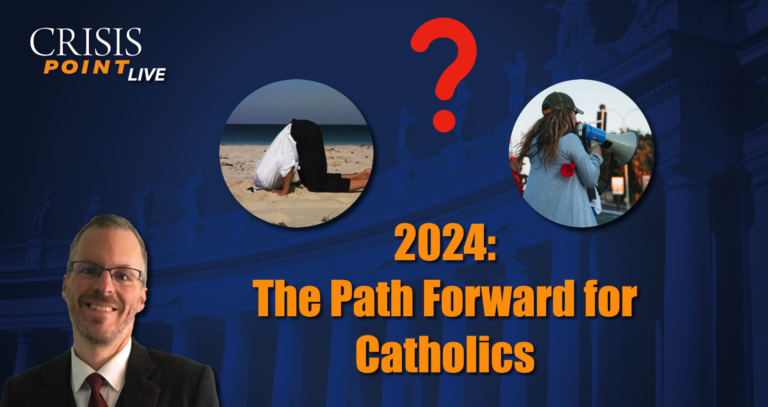
Catholics have been debating how to react to the crisis in the Church for some time now: Should we ignore Rome and focus on our family/parish/community? Or should we actively resist the scandals and corruptions coming from the Vatican?
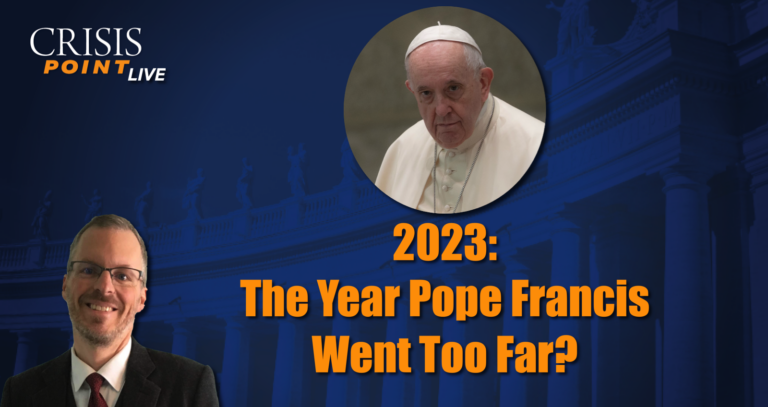
A year that began with the death of Pope Benedict XVI ended with an open revolt against Pope Francis. After a decade of “making a mess,” it appears even the bishops are tired of the constant battles and controversies of this pontificate.

Since the beginning of Christianity there have been catechisms to help the faithful understand Church teaching. In recent decades, however, catechisms are often used in an attempt to change Church teaching. A new catechism attempts to return to the original purpose of catechisms.
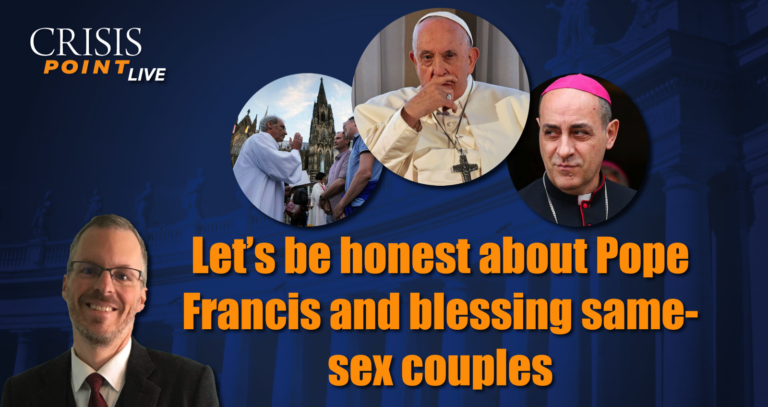
The new Vatican document approving the blessing of same-sex couples has caused a lot of controversy in the Catholic world, and sadly, many Catholics are not being forthright about what the document says.
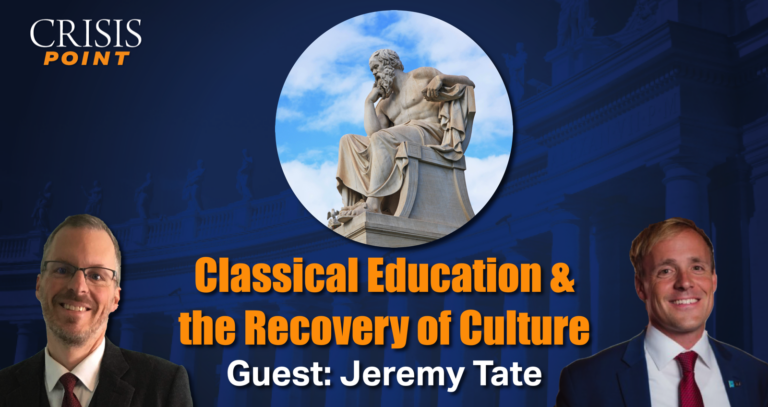
Virtually all our institutions today have been co-opted and used to push anti-Catholic and even anti-human ideologies. How can we take them back? The answer starts with education.

Archbishop Viganò is starting a new seminary, raising comparisons to SSPX founder Archbishop Marcel Lefebvre. Is this fair, or are there differences between them?

We all know the Church is in crisis right now. So how do we respond? A great first step is to look at how saints in the past responded to crises in their times.

After decades of cultural and political losses, what is the point of the modern Conservative Movement? Should Catholics still embrace this failed movement?

Today’s Church is sadly wracked with corruption. We’ll talk to someone who has spent more than a decade investigating that corruption on what he has found and how he keeps his own faith in the midst of scandal.

Hallow, the popular Catholic prayer app, recently ran into controversy when it hired rabidly pro-abortion actor Liam Neeson. Yet this was just a symptom of its problematic monetization and celebritization of prayer.

The election of libertarian candidate Javier Milei as president of Argentina raises the question among Catholics: Can a Catholic support a libertarian? Or is libertarianism contrary to Catholicism, particularly Catholic social teaching?