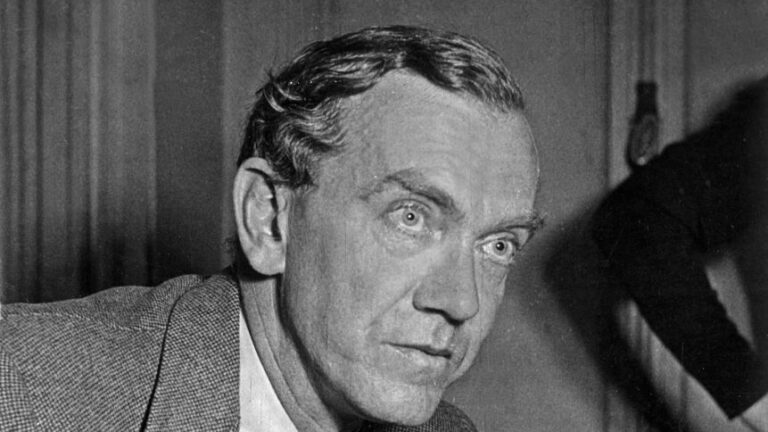
Anatomy of a Catholic Classic: Graham Greene’s The End of the Affair at 75
“Man has places in his heart which do not yet exist, and into them enters suffering in order that they may have existence.” (Léon Bloy, epigraph to The End of the Affair)


“Man has places in his heart which do not yet exist, and into them enters suffering in order that they may have existence.” (Léon Bloy, epigraph to The End of the Affair)
In February, I read a novel for a men’s book club (back then, we still had the good fortune to be able to meet for normal social interactions; March’s meeting got canceled). The novel was Graham Greene’s The Power and the Glory, which I had never read, and had always reproached myself for not having … Read more
“Sufficient for the day is the evil thereof.” ∼Matthew 6:34 Evil is an ever-present reality of our lives, but it is one with which we have difficulty reconciling ourselves. Why does evil happen to good people, or for that matter, why does evil happen at all? The problem of evil in the world—closely related to … Read more
Perhaps few twentieth-century writers in English were as bankable in the long-run as Graham Greene. I am not speaking in the mass-market/pulp-paperback sense of the word, nor in the high-literary James Joyce/Ernest Hemingway/T.S. Eliot sense, either. But somewhere between these two, Graham Greene gouged a niche—make that a ravine—and filled it with an international-experience (and … Read more
Thou art indeed just, Lord, if I contend With thee; but, sir, so what I plead is just. Why do sinners’ ways prosper? and why must Disappointment all I endeavor end? — Gerard Manley Hopkins, S.J. If success in this world, never mind the numerous and noisy proponents of the health and wealth gospel, … Read more
Flourishing fully in the 19th century, with Darwin and Marx ascendant and Freud in the wings, the novel matured as a very worldly art form. A kind of heightened journalism, the art of Dickens, James, Balzac and others chronicled society while examining class, romance, war, and politics. The great Russians — Tolstoy and Dostoevksy, the … Read more
Over at The Catholic Herald (UK), Roy Peachey has an intriguing piece on a number of Catholic writers he fears are being left by the wayside — not for any fault in their craftsmanship or in their ability to be relevant, but simply for geographic reasons: Most English language studies of the Catholic novel – and, I would guess, … Read more