

“The thing I fear the most is prosperity coming to Africa … Catholicism without suffering is not possible. Many today want Jesus taken from His Cross, but it is not possible. He remains fixed there as an example for Catholics until the end of time.” - Fr Alex Mugalaassi
Around 10:30 p.m., as the moon rises over the St. Augustine Institute, Fr. Alex Mugalaasi turns his gaze back again to Our Lady, where he begins his fourth or fifth Rosary of the day. Kampala, Uganda’s wall of noise—incessantly whining engines of boda-bodas (motorcycle taxis), overlapping Muslim calls to prayer, cries of street vendors, the microphoned “are-you-saved” hollering of street proselytizers, and the harsh squawks of large birds—has faded away.
Across the dirt pot-holed alley, on the other side of St. Augustine’s barbed-wire walls, dozens of orphans—refugees whose parents were killed or lost amid African conflicts—sleep under the care of a community of Jesuit caretakers.
A lullaby of crickets covers Uganda’s capital, where in eight or so hours a teeming cauldron of nearly five million residents will make another go of it beneath the pounding African sun.
Each night at this late hour, the 41-year-old spiritual formator for Uganda’s five major seminaries turns to his Queen. Along with the Ugandan Martyrs and future canonized American saint Archbishop Fulton Sheen, Mary has shaped his entire priesthood.
It is Our Lady who is illuminating his path to spiritually form Uganda’s future priests some—maybe even many—of whom will one day serve in parishes in the United States. “It is Mary who needs to mother each of these seminarians,” he said. “In the same way, I need her to be the mother of my priesthood.”
The Ugandan bishops rightly view Fr. Mugalaasi as a steady handhold to orthodoxy and safe passport back to Christ’s apostles and the teachings of the Church Fathers, and have entrusted to him the task of establishing yet another seminary for a propaedeutic year: the year that helps men discern their vocations by learning to pray, by gaining self-knowledge, and by coming to understand the true nature of the priesthood. If grace defines the future of Catholicism in Uganda, much of the credit will belong to the priest who spent nearly half his life in penniless poverty, raised friendless in a mud hut that seemed exiled from the human world.
Fr. Alex was only an infant when his father was killed in war. He and his mother, defrauded of the means of support available to them, were driven into the brush, where they were forced to survive with virtually nothing but themselves. He lived there until the age of seventeen, walking eleven miles to and from school each day. Most days, he went barefoot and did not eat until evening.
When he was eleven, his mother could find no more odd jobs. She told the boy Alex that she could no longer afford to send him to school, where he had been an A-student. In the years that followed, Alex fell into a deep sadness. He stopped praying and no longer accompanied his mother to Mass. He came to “hate God” for his long loneliness and isolation.
For nearly five years, he wandered through that wilderness of dryness, poverty, and anger, even after he was able to resume schooling. Throughout his trial, his mother never stopped praying the Rosary and begging God for her son’s return to the faith.
When he was sixteen, a priest from the local parish asked his mother whether Alex would be willing to photograph an ordination Mass at which a bishop was to ordain a local seminarian to the priesthood. Alex agreed.
“I was handed the camera and I never took a single photograph,” he said, smiling. “The beauty of the Mass overwhelmed me from beginning to end. I felt like I had entered heaven. I knew, right then, that I wanted to become a Catholic priest.”
In the months and years that followed, he hand-made roughly one thousand bricks each day in order to pay his seminary tuition.
A year after his ordination—noting his joy, keen intelligence, and his holy manner—some bishops sent him to Rome to further his studies, with the aim of preparing him to one day help form Uganda’s priests.
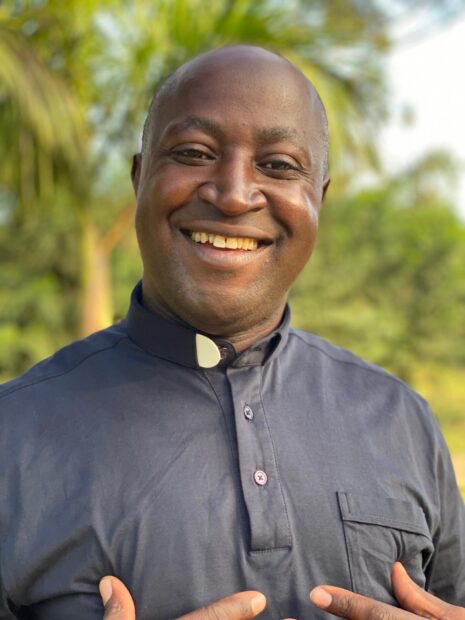
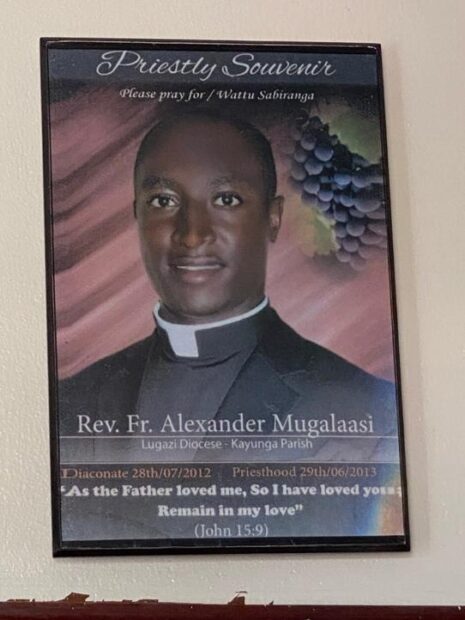
Recently, as I drove along a rural Maryland road, Fr. Alex told me that three bishops from his homeland had recently been murdered. “Each was poisoned,” he said with casualness, as though he were commenting on the song playing on the radio. “In Uganda, speaking about corruption or injustice often comes at a price.”
He hopes to raise up a presbyterate of future saints, men prepared even to clothe themselves in blood in imitation of Uganda’s martyred forebears—Saint Charles Lwanga and his twenty-one companions—who were tortured and burned alive between 1885 and 1887.
“Unless we are willing to walk with Jesus up Golgotha,” he said, “are we really priests? We are so used to poverty and pain in Africa. We are used to waking up with no food or water. This is what we know, and it is why our faith remains strong. Without total dependence on Jesus, we could not make it here. I pray it always stays this way in Africa, and that Ugandan priests refuse comfortable priesthoods.”
Death Comes to Children
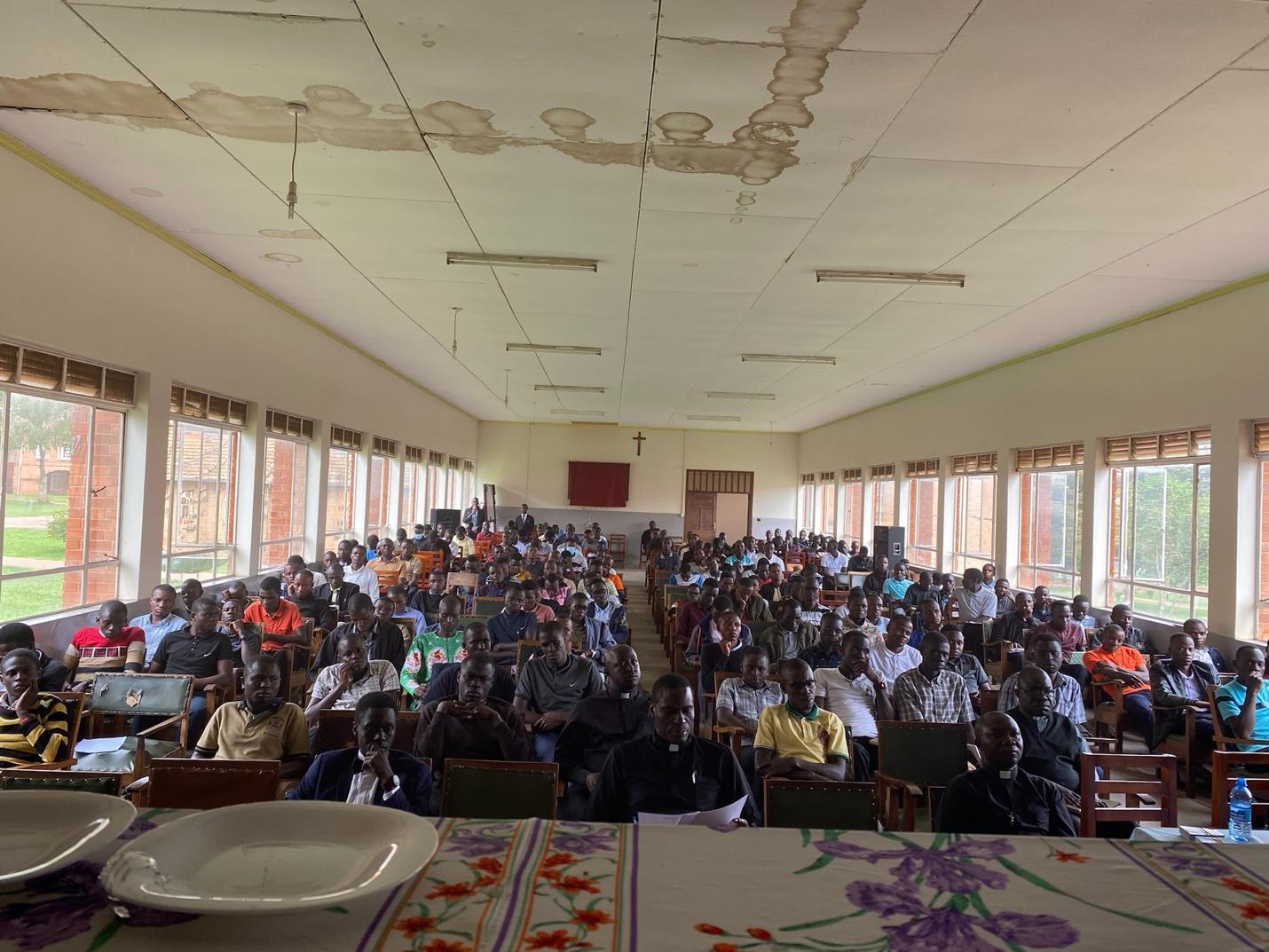
In 2024 the Uganda Episcopal Conference invited moral theologian and former seminary professor Prof. Janet Smith and myself to address more than 1500 aspiring priests at six seminaries throughout the country, which is about the size of Oregon but has 10 times its population.
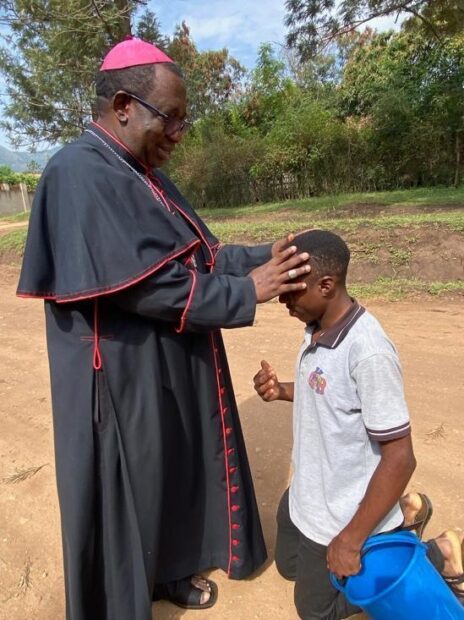
After a day-long car ride to the western border, Bishop Francis Aquirinus Kibira of the Diocese of Kasese asked me if I wanted to stretch my legs and accompany him down some dirt roads outside of his chancery/compound.
As birds chirped and children played soccer in the cool of the evening, he pointed to the mountain range looming in front of us in the Democratic Republic of the Congo. As we walked along, he shared a story of what had unfolded just months prior in a secondary boarding school down the road.
“The ADF [a jihadist group linked to the Islamic State] came over those mountains and killed 38 of our students, 42 altogether,” he said. “They set fire to our school while children were in class. The children who escaped were hacked to death.”
Twenty girls were killed by machetes, the youngest only twelve years old. Male students, a school guard, teachers, and nearby residents were also murdered, many burned alive. Six girls were abducted and driven over the mountains into the lawless wilderness of the Congo.
“This is living the Catholic faith in Africa,” Bishop Francis said. “This is why the faith is strong here. We cling to God beneath the weight of threats, death, and violence.”
He now has a daycare at his compound to protect children from such raids.
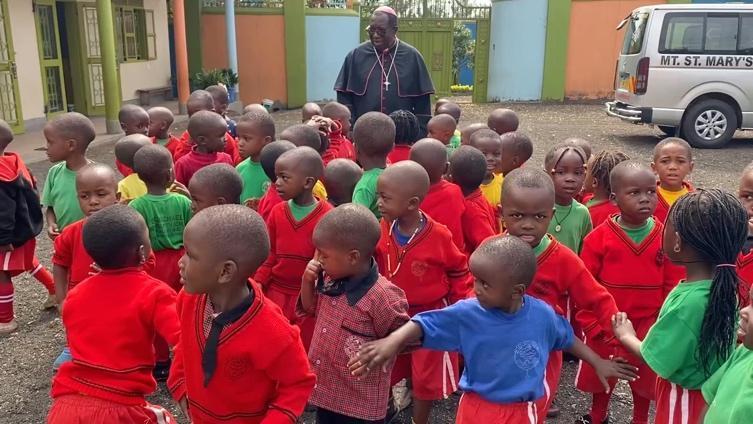
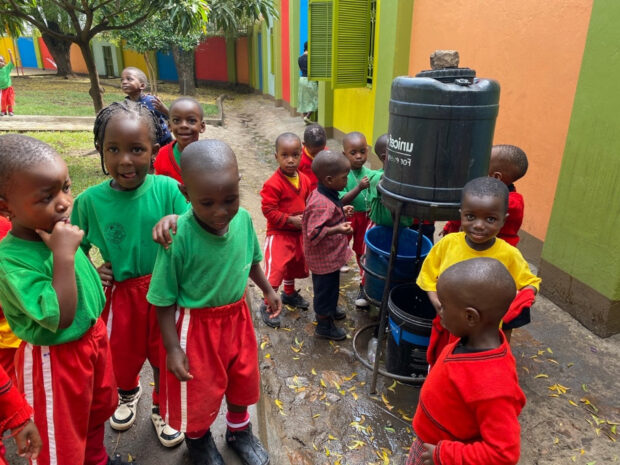
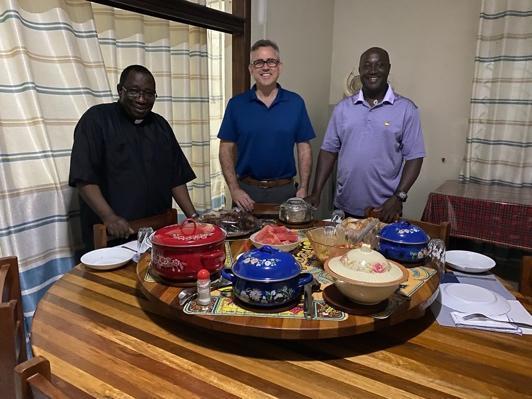
Later, he prepared a humble dinner feast for Prof. Smith, Fr. Alex, and myself at his small chancery, which felt less like an ecclesiastical residence than a makeshift shelter. Tall walls surrounded his home; two guards patrolled the grounds throughout the night.
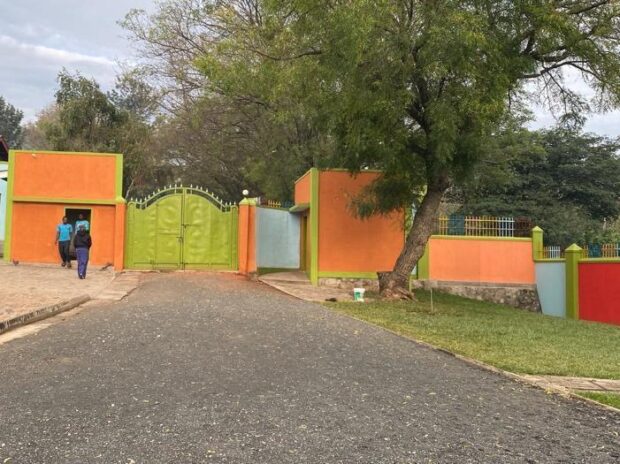
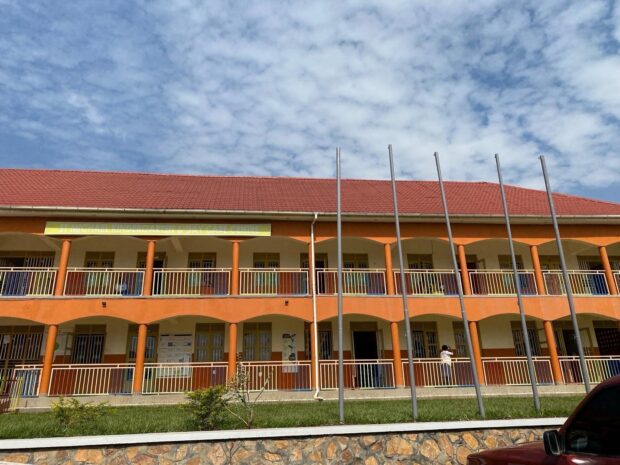
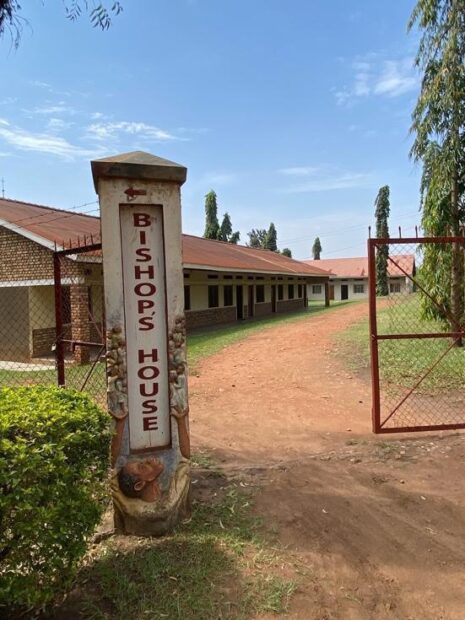
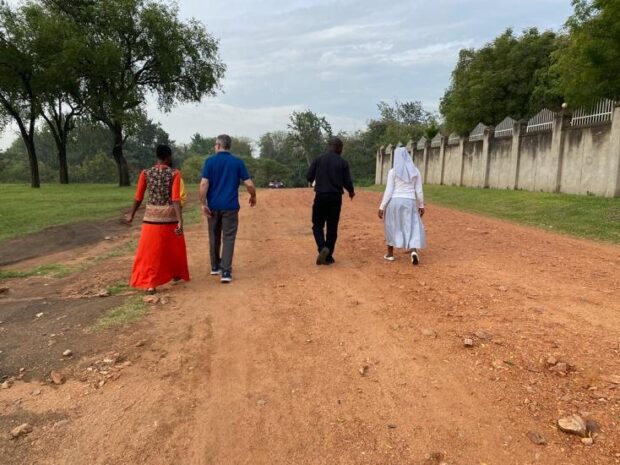
Early the next morning, several of us walked a quarter mile down a dirt road to what seemed a small shrine but is actually the Cathedral for the diocese. Bishop Francis had been building a new Cathedral but stopped construction when an earthquake decimated the local hospital. He told us that money had been donated for a new hospital, but he doubted it would ever make it past government corruption. He took the sickest patients into his compound and used the money he had raised for the new cathedral to build a hospital.
I found myself concerned and frequently looking back toward the mountains. I didn’t tell my traveling companions what Bishop Francis shared with me about the murderers on the other side of the mountain range.
Fighting Evil for Uganda’s Future
In May, Fr. Alex visited Maryland for the second consecutive year to spend time with some of America’s foremost spiritual formators at Mount St. Mary’s Seminary in Emmitsburg, seeking ways to enrich Uganda’s emerging propaedeutic program for the 245 young Ugandan men entering the propaedeutic program next month.
But each priest will encounter great challenges, not the least of which will be fighting the well-funded aims of NGOs (non-government organizations) targeting the nation. These outside entities are virtually unchecked in Africa as they impose the West’s ever more post-religious culture through social programs, bribery, and re-engineered notions of morality. As Janet Smith emphasized, NGOs are determined to normalize homosexuality in Africa, sometimes by having homosexual NGO workers prey on boys, offering them money for school tuition. We were told several times that this is an increasingly problematic occurrence in Uganda.
In a word, a constellation of globalist elites seeks to sever traditional Africa from its Catholic orthodoxy, its identity, and its rootedness in 2000 years of Church teaching and Tradition.
Fr. Alex constantly summons seminarians’ minds to the encroaching West, comparing their coming trials to the necessity of carrying Christ’s Cross. If they are to proclaim the Kingdom of God in society’s expanding kingdom of secularism, godlessness, and new moral norms, he warns them, suffering as a priest is inescapable. In a nation burdened by corruption, poverty, and threats against anyone who preaches contrary to a Muslim-dominated government, he urges seminarians to cultivate a deep friendship with God.
“Jesus came to us to become light for the world,” he said. “And Ugandan priests must draw this light from Him, and radiate it out for the poor of our country.”
Each year on June 3 in Kampala, more than one million pilgrims travel to Namugongo Martyrs Shrine for the annual commemorative Mass of the 22 Ugandan martyrs. They were canonized by Pope Paul VI in 1964 during the Second Vatican Council, making them the first canonized saints from sub-Saharan Africa in the modern era.
The date marks the execution of St. Lwanga and his companions, many of whom were burned alive for refusing to renounce Christianity and for resisting the king’s homosexual demands. Fr. Alex has a deep devotion to the 22 martyrs, and implores them each day to intercede on his behalf for their same strength, conviction, and courage to carry out the mission entrusted to him by Ugandan bishops.
He said that despite persecution, Western influence, and poverty, the Catholic faith in Uganda remains vibrant. Still, he worries about the possibility of clergy and laity giving into comfort, compromise, and the temptations of Western wealth.
“The thing I fear the most is prosperity coming to Africa,” Fr Alex said. “When Catholics are given ease—and the faith without the Cross—things begin to collapse. They stop relying on God and start relying on themselves. Catholicism without suffering is not possible. Many today want Jesus taken from His Cross, but it is not possible. He remains fixed there as an example for Catholics until the end of time.”
In some fashion, Fr. Alex hears Lawanga speaking from the grave: Seminarians must be led to the strength of martyrs. As my companions and I embraced death rather than corrupting our souls, lead your seminarians to rejecting Western comforts and softening Christ’s teachings. Temptations to deaden the faith cover your land. Fight for God.
In turn, Fr. Alex is forming the very priests we need to save the Catholic Church. One example was noted by Janet Smith. At a special Mass for teachers, she noticed that not a single teacher received Communion. She explained,
So, what did Father do after Mass? He performed the role of a father: he stepped forward and gently but firmly chastised each of them. He expressed his disappointment that no one had received the Eucharist; but also complimented them for not receiving when they knew they were in a state of mortal sin, most likely because they were sharing a bed with another.
He had used the wonderful analogy in his homily of everyone having within them a white dog that was good and a black dog that was bad. He said their choices were feeding the black dogs and starving the white dogs.
He spoke of Lent as being a time when our fasting and sacrifices should feed the white dog and starve the black dog. The teachers were all hanging their heads and avoiding eye contact with Fr. Alex.
When Father was done, one of the male teachers came forward and gave a longish speech that pretty much repeated and expanded upon Father’s reprimand. He admitted that they had let their black dogs go wild and were not living as they ought…The whole event stunned me: that no Communion was received; that Father gave them a clear reprimand; and that the teachers evinced no hostility to what he was saying.”
Young Catholic teachers in Uganda, at least on this day and at this Mass, understood mortal sin disqualified them from receiving. One hundred percent of them, it seemed that day, had obeyed the Church’s teaching on proper reception of the Eucharist. And their spiritual father, Fr. Alex, told them he would be giving them a series of instructions on God’s plan for sexuality and scheduling times for confession.
There is reason for hope in the future of Catholicism in America, and some of that hope will come from Africa, since Fr. Alex will send his well-formed priests, like spreading shafts of Bethlehem light, across our morally-challenged land, overdue for a martyr or two.
To learn more about Fr. Alex’s work with seminarians in Uganda, please visit a new website designed by Prof. Janet Smith: https://janetsmith.org/the-ugandan-seminarian-project-2/

You can read about our time in Uganda here: https://crisismagazine.com/tags/catholicism-in-uganda-series

To contribute to the Ugandan bishops’ new propaedeutic program, click https://www.osvhub.com/sacredheartlaplata/forms/ugandan-vocations.
There are no comments yet.