

The United States of America changed dramatically over the past five years. By most counts, millions of people entered the country illegally under President Joe Biden’s administration, many of whom went on to live in the interior of the country.
The southern border towns were hardest hit at first, but Denver, Chicago, New York, and countless other cities soon scrambled to put up migrants in hotels and school gyms—really wherever there was room. Local communities took the brunt of the pain, with school and medical systems strained, and a housing crisis exacerbated amid an acute increase in demand. We saw a steady stream of news stories about the drunk-driving deaths of locals, hit by illegal migrant drivers. Much of the mainstream media doesn’t report on these problems, but they’re very real.
A nation, in its most basic sense, is a people in a place, with borders that mark where they end and others begin, and the authority to decide who joins them. Without a border, you have an undefined land mass made up of disorganized and disconnected tribes. The Catholic Church has never argued for such conditions. Saint Thomas Aquinas taught an order to our loves, ordo amoris, that we owe more to those nearest us. The Catechism says nations should welcome the foreigner as far as they are able, and that political authorities may regulate immigration with the common good in view.
A nation, in its most basic sense, is a people in a place, with borders that mark where they end and others begin, and the authority to decide who joins them.Tweet ThisTo that end, a group called Young Catholics for Ordered Migration, or YCOM, sprang recently into existence to defend the traditional view of the nation and advocate for just immigration laws. The group describes itself as a response to what it views as the U.S. Conference of Catholic Bishops’ (USCCB) soft stance on immigration, one that, it believes, fails to weigh both sides of the immigration issue. Support for YCOM was immediate and overwhelming, with its X account rocketing to more than 10,000 followers within 24 hours of its launch.
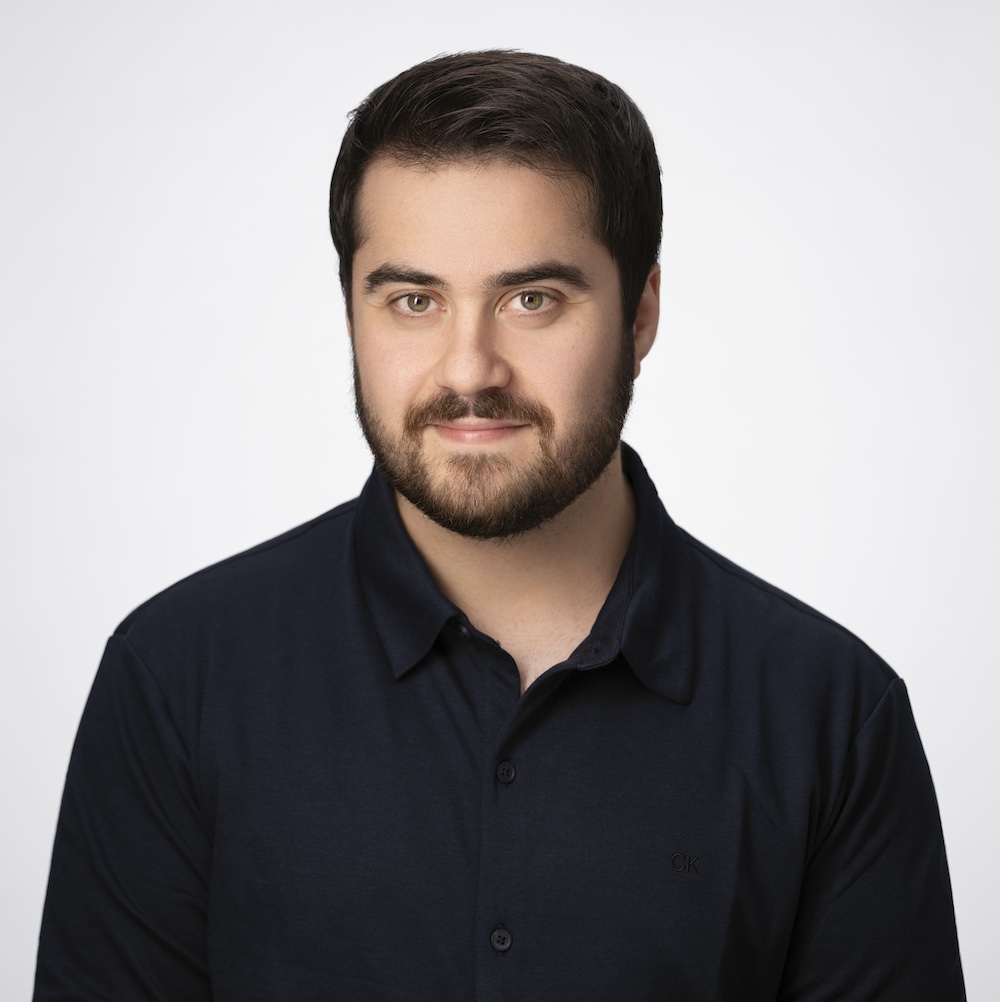
Last week, I spoke with the group’s president, Ethan Lington. He’s a father of four who was raised Southern Baptist but came into the Catholic Church in 2023. His account of how YCOM started is simple. Catholics were getting conflicting signals from the hierarchy on immigration, and that confusion warranted a response. The group’s first goal is to clear up what the tradition teaches on migration, including where a nation’s duty to welcome foreigners ends and its right to set order begins.
Over the course of our conversation, he made clear that the organization is in no way challenging the authority of priests and bishops who take a soft stance on immigration, but wishes to present another viewpoint on immigration that is 1) aligned with the Church’s historic stance, and 2) supported by a large contingent of the present-day laity.
On politics, Lington intends for YCOM to stay “completely nonpartisan,” and he does not want the group read as a political arm of the GOP, which typically supports tougher immigration policies than the Democratic Party. Endorsing politicians may be inevitable for the organization someday, but Lington says it will never be a lobbying organization. It’ll back specific public policies and highlight them, but for now, individual politicians it would rather leave alone.
Catholics were getting conflicting signals from the hierarchy on immigration, and that confusion warranted a response.Tweet ThisYCOM recently posted a response to the USCCB’s joint statement on migration, in which it argued that the bishops’ statement is a “prudential judgment about current enforcement” though ultimately not one “that binds the conscience.” Citing the Catechism, YCOM asserts that political authorities have the duty to regulate immigration for the common good, and that immigrants are obliged to respect the laws and heritage of the country that receives them.
This is really the crux of the argument coming from many young Catholics. It’s near-universally acknowledged that the dignity of immigrants must be upheld, but there are dramatic consequences to mass immigration that are not considered with enough gravity by some in the USCCB.
For starters, the rapid influx of both legal and illegal immigrants not only strains local services and schools, but lowers wages for native-born Americans since many immigrants work for much less. The Wall Street Journal even reported that farmers’ wages in Jacksonville, Florida have roughly doubled amid the federal government’s effort to deport illegal aliens. And Americans such as Laken Riley and Rachel Morin have suffered needless and brutal deaths at the hands of people who flouted the just laws of the United States. Therefore, YCOM argues that a just response would be for the nation to humanely remove every individual who entered illegally.
YCOM says that the American bishops affirm secure borders only in general terms before treating ordinary enforcement as presumptively indiscriminate and cruel, and that family unity, though a real good, doesn’t erase a nation’s right to decide who remains. The response to the USCCB closed with a line aimed at the hierarchy: “We ask only that the second half of Catechism 2241 be preached with the same clarity as the first.”
It’s near-universally acknowledged that the dignity of immigrants must be upheld, but there are dramatic consequences to mass immigration that are not considered with enough gravity by some in the USCCB.Tweet ThisLington once again reassured me that the aim of this organization is to help the hierarchy see a different point of view than what they currently consider. The bishops, in his view, are an older cohort looking at news coverage that gives them a “blurry and one-sided view.”
That coverage is relentlessly negative, with little attention to what he sees as the upside: criminals removed, jobs opening up, and communities remaining for Americans. The young Catholic laity live closer to the day-to-day experience of ordinary Americans, Lington argues, and he thinks it inevitable that they will become the bulwark on the immigration issue.
Young Catholics for Ordered Migration’s first focus will be messaging inside churches and dioceses, and mobilizing the laity, though to what end is yet unclear. Lington talks about thoughtful, charitable conversations with the hierarchy, and about winning status as an approved apostolate. That would mean sit-downs with priests, formal approval, and a recognized way for lay Catholics to speak to the Church.
Then there are the young Catholics who want a national response broader, more sweeping and severe than what the bishops are calling for. Lington hears them, and says that their sentiment is the group’s sentiment. For now, YCOM is a place for the laity who yearn to preserve the place they grew up in, and to reassure them that Catholics can support strong immigration enforcement. His advice was to keep praying, resist despair, and trust that with God’s help it gets done.
There are no comments yet.