

(Final) Part XVI in a series.
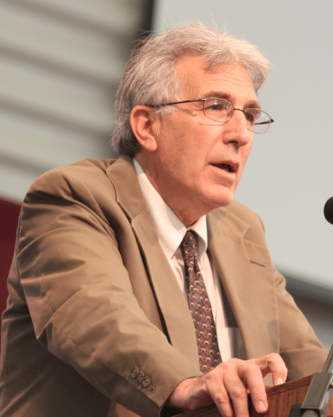
I first met Fritz Wilhelmsen in the summer of 1970, falling at once under the spell of his magic. Such a long time ago that was! Yet I remember it all as if it were but yesterday. There I was, this utterly naïve college student, strangely catapulted by circumstance (and God) to Catholic Spain. In the shadow of that immense poem in stone El Escorial, I sat day after day in a state of positive bewitchment beneath the gaze of the finest teacher I would ever know.
Years later, in a little book I dedicated to his memory called Garlands of Grace—a compilation of four centuries of devotional verse in which I’d selected samples I knew were among his favorites (e.g., Chesterton, Belloc, Roy Campbell)—I said that it was he who had first introduced me to the poetry of the transcendent, a lovely phrase, one which he himself had coined.
The memory of that wonderful and seminal time, despite the lapse of more than a half-century, still awakens a sense of fresh amazement and gratitude for the discoveries made under his tutelage, chief of which being the world of St. Thomas Aquinas. A world wherein, to quote Fritz’s great mentor Etienne Gilson, on whom he depended for much of his own thought,
it is a marvelous thing to have been born, wherein the distance which separates the least of beings from nothingness is quite properly infinite, a sacred world, imbued right down to its most secret and intimate roots, with the presence of a God whose sovereign existing saves it permanently from nothingness.
The entire course of my life was set by that blessed encounter mediated by Fritz with the metaphysics of being. It was not the “sawdust Thomism” to which so many Catholics of an earlier time were made to suffer—and from which not a few in their headlong flight would leave even the Faith itself behind. No, not that corrupt, desiccated Scholasticism of the Schools but a genuine unearthing of the teacher’s own thought, buried beneath the rubble of so many centuries of forgetfulness, the pure distillate of his own teaching; and then to render it all in the most expressive, indeed electrifying, way. As an educational experience, those formative and heady weeks spent in Spain at the feet of Fritz Wilhelmsen gave lasting and unforgettable shape to my life.
How did he do it? It was a kind of fusion, actually, which was quite uncanny in its combination of what I can only describe as rhapsody alongside rigor. He managed to bring together, quite miraculously it seemed, an oratorical style so dazzling as to disarm anyone within range of his voice, coupled with the surest and most comprehensive grasp of the entire science of existence. How that man could encompass with such effortless erudition the whole sweep of Western philosophy, from Heraclitus to Heidegger, and do so with such energy and eloquence as to leave one stupefied by the sheer baroque artistry of the performance!
It was the choreography of the thing, the kinetic play of the lecture itself, that proved especially impressive, riveting even. To witness Professor Wilhelmsen in action was an arresting experience.
First, he would set about filling the blackboard with odd notations, which only he knew to be the plan of attack; then, pacing the floor with an intense sense of theater—the air, meanwhile, filled with cigarette smoke amid the stentorian sounds of his voice—he’d purposively build to some sublime, showstopping conclusion that left the audience in a state of high exhilaration. It certainly left me absolutely starstruck, filled with amazement that here, on the wings of his great master Aquinas himself, were insights into being that no other philosopher had surpassed in the seven hundred or so years separating us from the medieval world.
It struck me at the time, and repeatedly since, that if the human capacity for wonder is what joins both poet and philosopher, a point Aquinas himself reminds us of in his Commentary on the Metaphysics of Aristotle, then it is unlikely that I, or anyone else for that matter, shall ever see a more perfect conjunction of the two than in Fritz Wilhelmsen. The whole thrust of his persona, of which I became so vividly aware in that classroom in Spain, was such an exuberance before existence itself that, to put it in Chestertonian terms, here was a man so astonished by “the things that cannot be and that are,” so elatedly glad to be given that which none of us can give, that he never ceased to exclaim, like Thomas himself in the teeth of the Manicheanist negations, “There is an IS!” Indeed, as Fritz himself would thunderously exclaim,
If the human capacity for wonder is what joins both poet and philosopher…then it is unlikely that I, or anyone else for that matter, shall ever see a more perfect conjunction of the two than in Fritz Wilhelmsen.Tweet This“Is Is and Is NOT!”
One felt a sudden, exhilarating surge of gratitude and delight on hearing pronouncements like that. In point of fact, one felt much as he himself must have felt when, riding his bike at age 10 around a lake in Detroit, he was suddenly hit by metaphysical lightning. He writes in an unpublished memoir,
There burst upon me the shattering conviction that I was, I existed. I was Being, separated from the abyss of Nothingness. I simply laughed out loud suffused with my good fortune. The privilege of existing at all covered the whole world and everything I looked at seemed to smile back, luxuriating in the beauty and glory of its own reality.
Like an impossibly rich and lavish dinner of which there is no end of food and wine—and all of it blessedly free!—we have all been summoned to that Great Banquet of Being. And what is it that leaves in the heart the lasting sense of stunned surprise? It is the fact that, but for the grace of God, none of us need be at all. “At the back of our brains,” says Chesterton, “there is this forgotten blaze or burst of astonishment at our own existence.”
Fritz never forgot. Like his hero Chesterton, he simply knew, having early on experienced what Jacques Maritain called “the intuition of being,” that each of us is finally a word spoken by Another, the Eternal Word—who were He to cease speaking our name, we should straightaway fall into nothingness.
In other words, there is no necessity for me to be, nor for anything else to be. Nevertheless, I am, I exist, and so do all things spoken into being by God. Thus, the temptation to give in to despair, to succumb to what Chesterton called “the blasphemy of pessimism,” must be at once and most fiercely resisted at every turn. As Fritz memorably put it in his The Metaphysics of Love, easily the best book he ever wrote:
The shock of non-being can stir within the mind a questioning as to why we are at all when every resource within our very nature cries out its own insufficiency and ontological poverty.
Shaken thus to the very core, right down to the bottom of contingent being, one instinctively feels “that shudder before non-being which is the heart of all anxiety.” And yet we must resist, we must not yield. Not one little bit. We are to choose the only possible alternative with which to banish the beast anxiety: namely, gratitude.
We are to choose the only possible alternative with which to banish the beast anxiety: namely, gratitude.Tweet ThisThis gratitude in truth is a grace, the kind of grace the Church calls “actual,” which can be any person or thing that lights up the night in which we live. But when gratitude is so profound that it reaches within to my very being and beyond to the whole of being to which I am related, then gratitude answers Love.
For me, in thinking back to that magical time so long ago, I see a kind of birth, the first stirrings of which in the womb of wonder I owe entirely to Fritz Wilhelmsen. And even now, in thinking of him in the 30 years following his death in 1996 at the age of 73, I am filled with gratitude for having known him. Indeed, I am especially grateful to God for putting such richness and rarity into my life at a moment when it might do me real and permanent good. Deo gratias!
There are no comments yet.