A Nation of Technoserfs
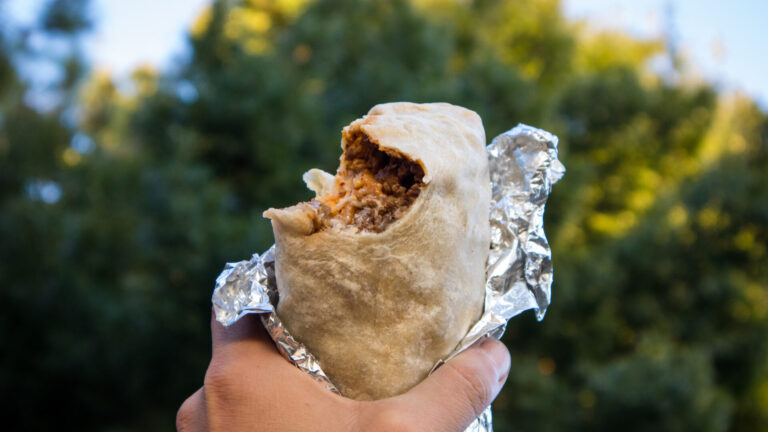
Wrapped in the viral $20 burrito is the strange phenomenon of having more and more, while simultaneously having less and less.


Wrapped in the viral $20 burrito is the strange phenomenon of having more and more, while simultaneously having less and less.
As a private equity manager and venture capitalist, Frank Hanna knows about how to succeed at business and how to create wealth. But his new book, A Graduate’s Guide to Life is no Art of the Deal-style book about how to get ahead and beat the competition. In fact, almost the opposite: “Competition is not … Read more
Experience shows that acquiring a large sum of money can be a problem. But, especially today, it is easy to miss or forget problems associated with money. Unless we have a rare level of virtue, we are prone to the magnetic pull of precious metals. Money has a uniquely powerful hold on our imaginations and desires. … Read more
Crisis recently featured a stimulating discussion on finances centered on Dave Ramsey’s principles of financial planning. The first piece by Richard Becker, “Of Dave Ramsey, Babies, and Birth Control,” contrasted Ramsey’s approach to finances with Catholic openness to life. The response by Stephen Herreid, “Dave Ramsey—Our Favorite Catechist,” countered by arguing that Ramsey’s principles are … Read more
Our Lord never despised the rich. Throughout his life, he moved among different classes of people with authority and ease. He converses with poor fishermen, but also with the scholars in the temple. He heals blind beggars, but also responds to the request of a centurion with a household full of servants. He was born … Read more
If anyone out there should happen to have a small fortune to dispose of, I would urge them to consider entrusting it to the Lu family. As philosophers, my husband and I can debate almost anything, but on this we have always agreed: we would make excellent rich people. As of yet, the theory is … Read more
At the end of part eight in this series, I observed that Pope Leo XIII lays a heavy obligation upon the rich. What is that obligation? Who are the rich? Like Thomas Aquinas, whom he admired so well, Leo is quite practical. It is right for a man to provide for his family so that … Read more
How about a movement of moral reform? Or as my friend Lydia Fisher puts it, how about a financial dissident movement? Challenging the establishment is as old as history. Sometimes going out directly to the public is the avenue needed to have one’s voice truly heard. The collapse of the former Soviet Union was sparked … Read more
Chances are, you’ve heard economics referred to as “the dismal science.” That unflattering description is glib and catchy; it is also 100 percent wrong. Let me set the record straight and explain why economics—far from being dismal—is cause for hope, joy, cheer, and optimism. Thomas Carlyle, a 19th-century Scottish essayist, coined the phrase “the dismal … Read more
Newt Gingrich’s surge to success in South Carolina has surely brought joy to the Obama White House. For his 12-point victory ensures the fight for the GOP nomination will not end soon and will get nastier. Indeed, it already has. Whether Newt or Mitt Romney emerges victorious, the candidate who comes out of the … Read more
I wrote here once before about the repartee that keeps the snarks flying between me and my beloved lady Texan. I noted that each of us treasures his own impossible dream. In mine, the Habsburg monarchy is restored in Central Europe, accepting the voluntary fealty of most of its historic realms (I don’t expect the Czechs, … Read more
It gives me no pleasure addressing Christopher Dawson’s views on economics. I learned much from Dawson in my formative years, reading The Sundering of Christendom and The Crisis of Western Education back in high school, and many of his other books in later years. His synthesis of Catholic and Western history is so persuasive, and … Read more
Random thoughts on the passing scene: Talk show host Dennis Miller said, “I don’t dig polo. It’s like miniature golf meets the Kentucky Derby.” Nothing illustrates the superficiality of our times better than the enthusiasm for electric cars, because they are supposed to greatly reduce air pollution. But the electricity that ultimately powers these … Read more
Benefiting from a hint from an article titled “Is Harry Potter Making You Poorer?”, written by my colleague Dr. John Goodman, president of the Dallas-based National Center for Policy Analysis, I’ve come up with an explanation and a way to end income inequality in America, possibly around the world. Joanne Rowling was a welfare mother … Read more
Thomas Edison invented the incandescent bulb, the phonograph, the DC motor and other items in everyday use and became wealthy by doing so. Thomas Watson founded IBM and became rich through his company’s contribution to the computation revolution. Lloyd Conover, while in the employ of Pfizer, created the antibiotic tetracycline. Though Edison, Watson, Conover … Read more
According to CBS News, “the number of people in the U.S. living in poverty in 2010 rose for the fourth year in a row, representing the largest number of Americans in poverty in the 52 years since such estimates have been published by the U.S. Census Bureau.” MSNBC said, “The U.S. poverty rate remains among … Read more
One of the things that has struck me, when I have gone on luxury cruise ships, is that most of the passengers look like they are older than the captain — and luxury cruise ships don’t have juveniles as captains. The reason for the elderly clientele is fairly simple: Most people don’t reach the … Read more
If you want to know what motivates the people involved in Occupy Wall Street, you can get a good idea from Think Progress, a left-leaning website. It offers a map of the continental United States labeled, “If U.S. land were divided like U.S. wealth.” In this representation, 1 percent of the people hold title … Read more
The recent Note issued by the Pontifical Council for Justice and Peace, “Toward Reforming the International Financial and Monetary Systems in the Context of Global Public Authority,” has liberals jubilant and conservatives apoplectic with its call “to create some form of global monetary management” (Sec. 4). This Note is a compilation of papal Social Teaching … Read more
American Christians are said to be at ease in our secular consumer culture. But didn’t Christ talk about giving away one’s worldly goods and living as the lilies of the field, not pursuing wealth and luxury? The New Testament isn’t a textbook in economics or politics. The New Testament is interested in the poor. But … Read more