

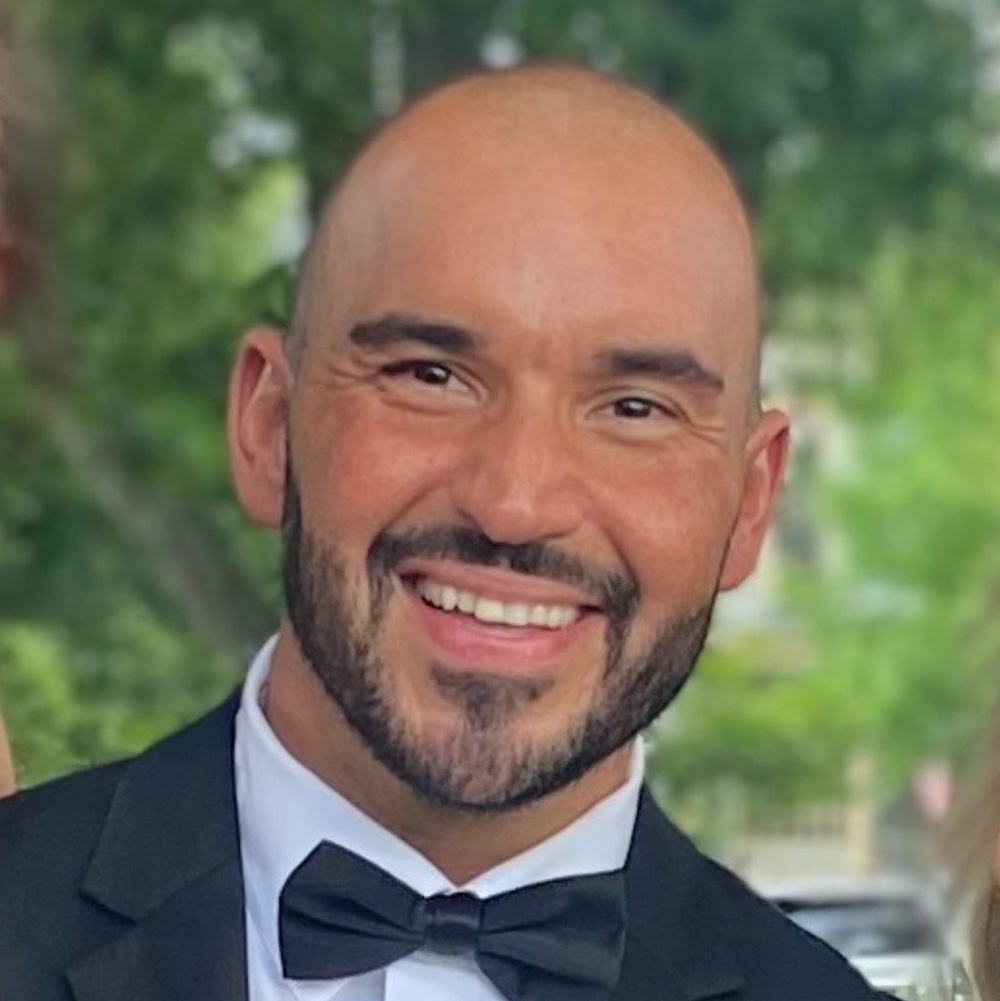
My wife, Rachel Mastrogiacomo, published her book, The Devil in Rome, last month, on December 3, the feast of St. Francis Xavier, patron of foreign missions. In it, she recounts how a charismatic Catholic priest with a secret double life drew her into psychological manipulation and satanic ritual abuse. Through her narrative, she exposes dark undercurrents of clerical corruption and emphasizes survival and resilience, describing how she ultimately found healing in Jesus through Mary and the Traditional Latin Mass. She also delves into our complex vocational story for the first time.
Anyone familiar with my wife’s case knows that it implicates individuals in positions of authority within the Church. It involves people in high places. Predictably, The Devil in Rome has drawn some sharp criticism—not because it is false but because it exposes truths that powerful forces would prefer remain hidden. We have many enemies, and they are both obvious and insidious: those who cling to institutional convenience, those who fear scandal more than sin, and those who profit from silence.
Today, as her husband, I break that silence. I refuse to allow cowardice, complicity, or corruption to go unchallenged. I stand beside Rachel not to provoke but to defend what is real, what is moral, and what is holy—and to show that no amount of power, fear, or deception can bury the light of truth.
While some may misinterpret my lack of publicity up until now as lack of support, the truth is that I commissioned my wife in this work for the purification of the Church. The publication of The Devil in Rome has made one thing unmistakably clear: defending my wife and defending the truth will provoke hostility. However, while that defense is necessary and nonnegotiable, Christ does not give me permission to meet hostility with sin. I am commanded to fight for the truth without surrendering my heart to hatred, to confront lies without becoming captive to anger. The battle is not only over what is said about the book but over who I become while saying it—and whether I will choose vengeance or conformity to the Crucified.
First, I will present here my public statement endorsing The Devil in Rome. Then, I will share how Christ, the Man of Sorrows, has been working in my interior life over many years regarding His command to love my enemies.
A Book the Critics Can’t Silence
The Devil in Rome is not a comfortable book—and it was never meant to be. It is a necessary one.
<strong><em>The Devil in Rome</em> </strong>is not a comfortable book—and it was never meant to be. It is a necessary one.Tweet ThisIn this searing and courageous work, my wife, Rachel Mastrogiacomo, tears away the veil that too many would prefer remain intact. With precision, restraint, and unmistakable moral clarity, she exposes a darkness that has festered within the Church not because the Church is false in any way whatsoever but because evil has always sought to corrupt what is holy from within. This book stands as both a witness and a warning.
Rachel’s testimony is devastating precisely because it is sober. She does not indulge in sensationalism. She does not posture. She recounts her experience with the gravity of someone who understands the weight of truth and the cost of speaking it out loud. Her detailed narrative reveals how spiritual authority can be weaponized, how psychological and spiritual abuse can masquerade as holiness, and how silence—especially institutional silence—becomes a collaborator with evil.
What makes The Devil in Rome indispensable is not only what it reveals but why it reveals it. This book is written from within the heart of the Church—not against it. Rachel refuses the false choice between loyalty and truth. She understands, as the saints have always understood, that the Church is most purified not by denial but by light. Darkness does not disappear by being ignored; it retreats only when exposed.
Predictably, the book has its critics. We have many enemies, and they don’t want the full truth to come out. But history teaches us that resistance to truth often disguises itself as prudence, unity, or concern for scandal. Those who reflexively dismiss this work often reveal more about their own unwillingness to confront reality than about the credibility of the author.
Some of these critics, in my opinion, are quite literally in bed with those being named here and are solely concerned with protecting their masters out of fear and cowardice or because of blackmail. That’s right, you can read that sentence again; I mean it.
Some prefer to keep their heads buried safely in the sand rather than grapple with the implications of what Rachel documents so carefully. Others bristle not because the book is false but because it is inconvenient—because it threatens systems, reputations, and comfortable narratives. After all, it is far easier and more convenient to call this all “satanic panic” than actually acknowledge the Luciferian ceremony performed in the Vatican’s Pauline Chapel on the night of June 30- July 1, 1963, as reported by Fr. Malachi Martin.
The Devil in Rome implicitly challenges the reader to ask a difficult question: Who benefits from silence? History’s answer is never the victims. This book belongs alongside the testimonies that have, time and again, forced institutions to confront their own failures. Like the prophets before her, my wife speaks not to destroy but to call to repentance. Her fidelity to the Barque of Peter, even while naming those who have damaged it, is among the book’s most striking achievements.
Those who read this book will easily conclude that Rachel did not write it out of vengeance or self-defense. No one would know anything of what happened had she not told the story. And despite what this handful of pusillanimous, ineffectual critics post haphazardly online, Rachel’s narrative is true. It is airtight and has not once changed. She is currently enduring public mockery and incessant attacks and falsifications not for herself but out of love for Holy Mother Church and concern for those who are still being exploited in the same filthy, diabolical practices.
Ultimately, The Devil in Rome is an act of hope. It insists that truth still matters, that victims still matter, and that the Church is worth fighting for—not by pretending evil does not exist within her walls but by refusing to let it remain hidden.
This is a book that had to be written. And once read, it cannot be unread.
Love for My Enemies: A Gospel Command Lived in the School of Suffering
The command to love one’s enemies stands at the heart of the Gospel and at the summit of a Christian moral life. It is not a sentimental exhortation, nor a call to moral weakness, but a participation in the very love of Christ—crucified, rejected, and yet merciful. Few teachings of Our Lord are more difficult to live, especially when injustice touches those we love most. For me, this struggle has become intensely personal in the opposition and persecution surrounding my wife and her book.
Christ’s words—“Love your enemies, pray for those who persecute you”—are clear; but clarity does not make obedience easy. When hostility is persistent and public, the heart naturally seeks self-justification and retaliation. The temptation is not merely to defend the truth, which may be necessary, but to harden oneself interiorly against those who oppose it. It is here that the spiritual battle is waged—not only in words spoken or written but in the hidden movements of the soul.
Fyodor Dostoevsky understood this battle with painful realism. In The Brothers Karamazov, Fr. Zosima teaches that true Christian love is not simply an abstract love for “humanity” but concrete love for real persons who are often deeply flawed and even hostile. He warns that loving mankind in theory is easy, while loving the neighbor who wounds us is nearly unbearable. Christ is not asking us to love an idea. Rather, He’s asking us to love the specific people who are causing the pain.
Dostoevsky also exposes the uncomfortable truth that resentment often disguises itself as righteousness. To love one’s enemy, in his vision, is to accept responsibility for the spiritual state of the world, beginning with one’s own heart.
This insight strikes close to home. When my wife’s work is misrepresented or attacked, I am tempted to see those responsible only as adversaries. Yet Dostoevsky would remind me that the line between good and evil runs not merely between camps but through every human heart—including my own.
What does this mean? It means that even while defending my wife and the truth, I still am called to guard my own heart from becoming corrupted by hatred. Their wrongdoing does not give me permission to let my heart become hard.
Simone Weil approaches the same mystery from a different angle, with austere clarity. She writes that love of enemy is possible only through attention—a radical, self-emptying gaze that renounces the need to dominate or to be vindicated. For Weil, affliction strips a person of illusion and exposes their powerlessness. The one who suffers unjustly is tempted to grasp for force, yet true love consists in consenting to weakness without consenting to falsehood.
This is a severe teaching. To love one’s enemies, Weil suggests, is to allow oneself to be wounded without allowing the wound to become a source of hatred. It is to accept that God alone sees fully, judges justly, and redeems perfectly. In this sense, loving my enemies amid the persecution of my wife’s work means relinquishing the demand that the world recognize our innocence or reward our fidelity. It means entrusting our cause to God even while continuing to speak the truth with firmness and integrity.
Neither Dostoevsky nor Weil offers consolation in the form of easy answers. Both insist that love of enemy passes through suffering. Yet both point, implicitly and explicitly, to Christ as the fulfillment of this paradox. On the Cross, Christ does not excuse evil, He absorbs it. He does not call down judgment; He prays for forgiveness. In doing so, He reveals that love is stronger than injustice—not because it ignores it but because it overcomes it from within.
In this light, the persecution surrounding Rachel’s book becomes not only a trial but a test of discipleship. Will I allow anger to shape my soul, or will I allow suffering, united to Christ, to purify it? Will I seek victory over my enemies or their conversion? These questions cannot be answered once and for all; they must be answered daily, often painfully.
When Rachel’s book is publicly criticized or misrepresented, my first reaction is often to feel anger and to want to strike back with sharp words. Defending her and the truth is good and necessary. But the spiritual test comes afterward: Do I continue replaying the offense in my mind, judging the motives of those who attacked her and secretly wishing them harm or humiliation? Or do I choose to stop, pray for them, and ask God to correct what is false without letting my heart grow hard?
Choosing the second path does not mean giving up the truth. It means refusing to let injustice turn me into someone I am not called to be.
To love my enemies is thus not a feeling I can manufacture but a grace I must ask for. It is a decision renewed each time resentment rises. It is a prayer offered for those who oppose us not because they deserve it but because Christ commands it—and because, in doing so, He draws us closer to His own Sacred Heart.
The Gospel promises no worldly triumph for those who love their enemies. It promises something far greater: communion with Christ, freedom from hatred, and participation in a love that redeems even persecution. In choosing this path, however falteringly, I place my hope not in vindication but in God, who alone brings truth to light and transforms suffering into grace.
The Lion and the Lamb
In the end, some may see these two reflections as contradictory to one another, but this very dichotomy is the reality into which Jesus has called me. As a husband defending my wife and defending the truth as told in The Devil in Rome, I feel the call to roar, to confront evil boldly, to resist corruption with the courage Christ Himself modeled as the Lion of the Tribe of Judah. Yet I am also called to be the silent lamb, led to the slaughter, to endure attacks from my enemies without allowing my heart to harden, to respond not with vengeance but with patience, humility, and prayer.
To live fully in this tension—to defend truth without surrendering my soul—is the reality of following Christ in a world where light and darkness collide. This is the path I choose to walk, falteringly but faithfully, trusting that He who roars and suffers, who judges and forgives, will make all things new in His time. In this spirit, I have chosen to break silence.
Damn, brother. This is deeper than I expected from a Crisis article. Thank you for publishing it.
As a fellow layman who has pushed back on the cowardice and corruption of priests and bishops, I will admit I have not succeeded in loving my enemies very well. I have been able to fight effectively fueled by anger, (putatively righteous), but I fear it has gone beyond that, and the admonition to “love my enemies” has rung as hollow, silly, and undermining to the work that must be done. Your essay is giving me pause, and that’s a rare thing these days.
Thank You for standing by your wife!! I believe you could not have written this article before. You had to Pray much to conquer your anger and it can only be done with The Grace of God.
Thank you, your article reminds us how to be Good Christians towards those who hurt us or want to silence the truth.