

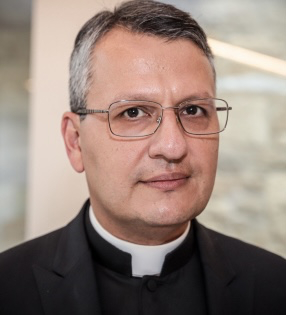
Last Thursday marked the eighth anniversary of the secret provisional agreement between the Holy See and the Chinese Communist Party (CCP) regarding the Chinese Catholic Patriotic Association. (CCPA). Designed by Vatican Secretary of State Cardinal Pietro Parolin in 2018, with the blessing of Pope Francis, the agreement recognizes the supreme authority of the CCP to appoint bishops and suppress and/or establish dioceses in China—the Bishop of Rome merely approves. Reportedly, shortly after Pope Francis’ election, the new pope assigned the disgraced sexual predator Cardinal Theodore McCarrick to visit China with the task of resuming discussions with the CCP—after Pope Benedict XVI ceased to do so—regarding the appointment of bishops in Communist China. He made at least eight trips to China and provided updates on his negotiations with the CCP to both Pope Francis and Cardinal Parolin.
Established in 1957 under the authority of Mao Zedong and managed by the United Front Work Department of the CCP, the aim is to align Catholicism with communist ideology. By early 1958, Beijing illicitly appointed the first group of bishops without consulting the Holy See. In June of that same year, Pope Pius XII released his encyclical Ad Apostolorum Principis, in which he denounced China’s “parallel” church by refusing to acknowledge any episcopal consecrations carried out by the CCPA without prior approval from the Vatican.
Established in 1957 under the authority of Mao Zedong and managed by the United Front Work Department of the CCP, the aim is to align Catholicism with communist ideology. Tweet ThisCatholics who remained loyal to Rome were forced to go underground. From that point forward, those faithful to Rome operated in secrecy. A notable figure during this time was the late Roman Catholic Bishop of Shanghai and Apostolic Administrator of Suzhou and Nanking Cardinal Ignatius Kung Pin-Mei. To this day, they persist as an “underground” Church, which the Vatican no longer supports due to the provisional agreement. Many priests, nuns, and laypeople continue to face imprisonment, torture, and, in some instances, even execution for their refusal to comply with the CCP’s institutional church.
When Pope Leo XIV addressed the public on May 25 of last year, just weeks following his papal election, he recalled the Day of Prayer for the Church in China during his Regina Caeli address. This day coincided with the moment in 2007 when Pope Benedict XVI wrote a letter to Chinese Catholics, acknowledging their “faithfulness to Christ the Lord and to the Church—a faithfulness that [they] have manifested sometimes at the price of grave sufferings.” It was hoped that this would signal a form of revival for the “underground” Catholics who refuse to align with the CCP-controlled Patriotic Church.
The contrary happened, as the Vatican announced on September 10 that Pope Leo XIV, at the behest of Chinese President Xi Jinping, had suppressed the two historic dioceses of Xiwanzi and Xuanhua—both established in 1946 by Pope Pius XII. He replaced them with a new Catholic diocese in the northern province of Hebei, sharing the same name—Zhangjiakou—as one that was created decades earlier by Beijing without Vatican approval. Fr. Joseph Wang Zhengui was appointed as the Bishop of Zhangjiakou at the request of the CCP, having received episcopal consecration on the same day the new diocese was announced.
As of today, two underground bishops, Augustine Cui Tai and Thaddeus Ma Daqin, are currently detained and under house arrest, with their ministerial duties curtailed by bishops appointed by the government. Bishop James Su Zhimin, who is 94 years old, has not been seen since 2003. Bishop Xin Wenzhi, aged 63, remains forcibly disappeared. Furthermore, Bishops Vincent Guo Xijin and Peter Shao Zhumin, who refused to register with the CCPA, have been under house arrest for over a year. Priests who decline to join the Patriotic Church continue to face arrest and torture, and those released from detention endure continuous harassment, including the loss of their bank accounts, passports, and SIM cards, resulting in a lack of means for survival.
It is rather haughty that the Holy See imposed excommunication on the SSPX bishops merely for their desire to continue administering the Sacraments of Confirmation and Holy Orders—after being denied on various occasions an audience with Pope Leo XIV to explain their situation—yet the successor to St. Peter complies with an atheistic dictator leading a communist-supported parallel church.
It is rather haughty that the Holy See imposed excommunication on the SSPX bishops…yet the successor to St. Peter complies with an atheistic dictator leading a communist-supported parallel church.Tweet ThisCommunism is fundamentally malevolent. Beyond its advocacy for an atheist doctrine, communist regimes have been responsible for some of the deadliest occurrences in modern history, with estimates suggesting that around 100 million people lost their lives under communist governments during the 20th century alone. Moreover, the ideology’s legacy is characterized by economic stagnation, systematic repression of essential freedoms, environmental catastrophes, and the hypocrisy of a ruling elite that undermines its own principles of a classless society.
These failures are not isolated events or mere mistakes in implementation. They are observable on every continent where communism has been attempted—from the former Soviet Union, to China, to Cuba, to North Korea, communist regimes do not merely curtail freedom, they view individual autonomy as a threat to the system’s survival and actively seek to eliminate it.
Freedoms of speech, press, assembly, movement, religion, and even personal thought have all been subjected to the control of the communist state. The justification remains unchanged: the collective good takes precedence over any individual rights. In practice, “the collective good” is defined by whatever the ruling party decides it should mean.
The eradication of private property, for instance, is a fundamental tenet of communist ideology rather than a simple outcome. The regimes began the seizure of real estate almost immediately following their respective revolutions, abolishing the right to own land in urban areas and appropriating buildings that exceeded certain modest value thresholds. Karl Marx explicitly described communism as “the positive expression of annulled private property,” indicating that this was not a temporary wartime tactic but rather the ultimate aim of the ideology.
Yet the current papacy seemingly maintains that some beneficial and favorable outcomes may arise from the aforementioned provisional agreement. This stance contrasts sharply with the actions of Pope St. John Paul II. Elected in 1978, he exposed the duplicity of the Soviet Warsaw Pact regimes by confronting them directly. With the support of U.S. President Ronald Reagan, the Polish pope provided financial backing to anti-communist organizations, most notably Solidarity, which not only dismantled the communist regime in Poland in 1989 but also initiated a chain reaction that led to the collapse of other communist governments, including the U.S.S.R.
In the 20th century, communist regimes effectively infiltrated the Church to destroy it from within. It is astonishing to believe that Communist China has experienced a change of heart and is not engaging in similar actions. As Archbishop Emeritus of Hong Kong Cardinal Joseph Zen said at the outset of the secret pact with China: “They’re giving the flock into the mouths of the wolves. It’s an incredible betrayal.”
One may suspect that Popes Francis and Leo know exactly what they are doing and why behind the curtain, between the sheets or shielded by their smoke & mirrors without sharing their intent and purpose with objective clarity and transparency.