

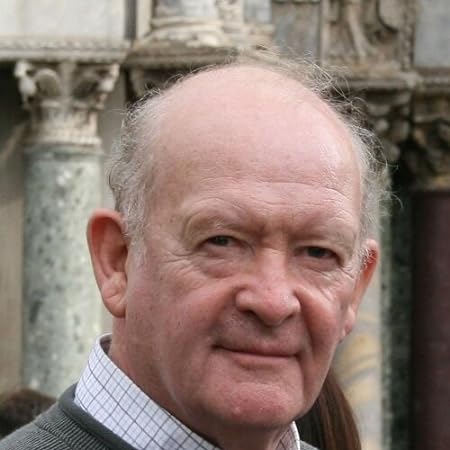
I was born in England before the Second World War, during the pontificate of Pope Pius XI, with an affliction that I once thought was the curse of my life but that I now see was my greatest blessing. There are degrees of dyslexia, and I was 40 degrees below zero. It would seem that my predicament was hopeless, and others thought the same at the grammar school where my parents paid for me to be educated because I could not even sit for a scholarship, never mind pass it. They hoped that a miracle would take place; but in those days, the teachers did not know what dyslexia was, so I was just written off as stupid or a lazy layabout who could only be cured by the “strap.”
A miracle did not take place, at least not the sort of miracle for which my parents prayed. The first blessing that I received was that I was rescued from the herd—who, I came to realize, were being seriously and spiritually misled by secular priests in the name of a classical education and a flawed Catholicism. In my last three years, my parents further paid for me to be a boarder, while continuing to pray for the sort of miracle that never came.
But in those years another sort of miracle did come. I came to know and put my trust in a very good and Holy Priest who became the center of my life and from whom I received my vocation and engineered my passage through to join the Franciscan Order, despite the lack of qualifications that were unknown to my future superiors.
After a year’s novitiate and two years of philosophy—in which time I painstakingly taught myself to read and write, at first badly, and then very well—it was discovered that I was not an intellectual cripple after all. But it would be almost 20 years before a doctor diagnosed what I had never known. Thanks to the Holy Priest, who not only continued to take an interest in me but who taught me to pray and even led me into the beginning of the contemplative way in the novitiate, I began to see more clearly than my peers what was happening to the Church into which I was born.
Thanks to the Holy Priest, who taught me to pray and even led me into the beginning of the contemplative way in the novitiate, I began to see more clearly than my peers what was happening to the Church into which I was born.Tweet ThisMy first eye-opener was that apart from the Divine Office, which is the outward expression of our love of God, nobody appeared to turn to personal prayer. It is only here that true love is first generated under the influence of the Holy Spirit, which determines the sincerity, the conviction, and the heartfelt way in which the Divine Office, in which this love is expressed, is read, recited, or sung.
My second eye-opener was when I began my four years of theology. There were three major subjects—Scholastic Theology, Moral Theology, Canon law—and the “lesser subjects” of Church History and Scripture. Spiritual Theology was not taught. Systematic Theology teaches how to come to know God and His relationship with His creation, whilst Spiritual Theology teaches how to love Him.
Without Divine Love, every religious institution is bound to fail. When I joined the Order, there were over three hundred members of the Province. Now the Province is no more. What happened to them happened to a myriad of other religious orders that have not been able to reinvent themselves to survive without the sort of prayer that can alone save them. “With love all things are possible, without it nothing is possible.”
My third eye-opener began in 1969. A side effect of my dyslexia was that what I was able to learn in my theology, and that included what was then called the New Biblical Theology that was outlawed by our teachers, was retained on the hard disc that resides in my mind never to be lost. Then my initial lack of inability to express myself with the written word was compensated by an ability to express myself with the spoken word.
This enabled the bishop to appoint me as the Director of his Diocesan Retreat and Conference Center in London—which at the time was the only one in the Metropolis—just five years after I was ordained. It was firstly here, from 1969-1981, then as a lecturer in Rome, then as a travelling lecturer and retreat master, that I found that my experience, far from being the exception to the rule, was the rule.
Of course this did not happen suddenly. It all began at the Renaissance when the previous Credo, “I believe in God,” was replaced by the new Credo, “I believe in man.” To begin with, this new Credo was the Creed of the few. However, the few were in a small majority that grew progressively over the years.
After the Council of Trent and for a hundred years or more, the old Credo was mainly in force, enabling many spiritual writers to maintain that these years were the high point in Modern Catholic Spirituality. But the change came rather suddenly, and “the few” became the many as anthropocentric spirituality received a shot in the arm when the growing heresy of Quietism, which led people back into Protestantism, “inspired” anti-mystical fanatics to crush any form of prayer that had the slightest whiff of Quietism about it (see Enthusiasm by Msgr. Ronald Knox: chapters XI & XII).
This new Credo received a further shot in the arm. For as the effects of the anti-mystical witch hunts were succeeding, the Enlightenment rose up in all its human glory to damn everything that could not be subjected to reason, not God’s reason but man’s reason. They could neither see nor understand that the greatest power in Heaven or on earth comes from God—namely Divine Love—because it is superrational and so cannot be put under the microscope of human reason.
Without the all-pervading Love of God which had been all but banished in subsequent centuries, except for the faithful few, disaster after disaster followed in ever increasing numbers. Without the infused virtues (and in this case without the infused virtue of wisdom) that St. Thomas insists are only given to us through and after purification in prayer, the new god of reason cannot function properly. For it is not primarily inspired, guided, and governed by the pure love that comes from within God but by the twisted love that comes from within man, as Sigmund Freud would show later, demythologizing Original Sin.
Through personal revelations such as the revelation that introduced the Sacred Heart and the many further revelations of Our Lady, we have been called back, again and again, to opening ourselves to receive the Love of God and the infused virtues and gifts of the Holy Spirit. Although these make saints out of sinners, the mainstream Church has remained aloof. The apparitions that took place at Fatima, for instance, were authenticated by the Church herself; but bizarrely, Our Lady’s clear instruction was ignored. She had instructed in her letter to be opened in 1960 that the whole Church was to be recalled to repentance, prayer, and sacrifice. This message was urgent because if it was not received and acted on, certain specific and terrifying consequences would follow.
Then something outrageous took place that was worthy of Renaissance man, suffused with the Spirit of the Enlightenment. Human arrogance triumphed over the revelations that they themselves had verified as authentic. The pope ignored Our Lady’s clear instructions, as did subsequent popes, and he called a council instead. Has there ever been a previous council when so many bishops came together with their theological advisers when the vast majority of them had been so deprived of the deep prayer in which St. Thomas says God gives the infused virtues, most especially in this case the infused virtue of wisdom?
You cannot just pray to the Holy Spirit to inspire and guide your deliberations when in the last three hundred years or so you have methodically extracted from Catholic formation the ongoing journey through meditation and into contemplative prayer that enables Him to do what cannot be done without Him. Today, synodality has devised a man-made method called discernment to guarantee that you get the answers that have in fact been agreed upon before the process begins. Genuine Catholics can see through these unholy confidence tricksters a mile away because they see with eyes purified by the Holy Spirit.
Today, synodality has devised a man-made method called <em>discernment</em> to guarantee that you get the answers that have in fact been agreed upon before the process begins.Tweet ThisThe Second Vatican Council had not come this far, but it had come far enough down the road from a once God-centered theology to a man-centered “theology” that leads to inevitable disaster. However, due to the absence of profound contemplative prayer that had long since been taken out of Catholic formation for the priesthood, the Holy Spirit and the infused virtues could not possibly have played the part that everyone seemed to think just happens automatically, or at least after a few statutory prayers and hymns are said or sung.
It is not in a single prayer or hymn, no matter how heartfelt it might be said or sung at the time, but through years of the personal ongoing prayer and purification that can alone enable the Holy Spirit to do what cannot be done without Him. I am not referring to the Divine Office but to the personal prayer where the Divine Love is learned that is expressed in the Divine Office that is naught but an empty shell without it. The fact that the various different and disparate factions who participated in the Council were never united, confirmed their spiritual deficiencies and therefore the mixed blessings that ensued. For what appeared to them as compromises appeared to outsiders as ambiguities and to the unscrupulous as opportunities to be used to further their own pernicious purposes.
If you were to ask the participants of the Second Vatican Council if they had read and understood the writings, for instance, of the two great Doctors of the Church St. John of the Cross and St. Teresa of Avila, who detail how God prepares us to receive and be inspired by the Holy Spirit, you would receive blank faces from 98 percent of them. This frightening legacy was something that I was able to verify for myself when called to Rome to lecture on the Mystical Theology that nobody else in Rome seemed to know anything about. Today, the vast majority of the leadership in Rome would not have a clue what mystical theology is all about, although that has not stopped a leading cardinal from equating it with sexual orgasm.
Today, the vast majority of the leadership in Rome would not have a clue what mystical theology is all about, although that has not stopped a leading cardinal from equating it with sexual orgasm. Tweet ThisMeanwhile, for generations now, the rank and file of ordinary Catholics have been deprived of the Christ-centered spirituality that was commonplace in the Early Church. Here, too, I include whole battalions of “modern theologians” and even “spiritual theologians,” and whole armies full of “Catholic intellectuals” and studios filled by “Catholic communicators,” most of whom have been brought up on, at best, an impoverished Catholic Spirituality that is redolent with the spirit of Renaissance man.
That is why, ignorant of the practices that lead to receiving the infused virtues of wisdom and fortitude, they can neither see with Christ-like clarity nor “call to book” the deceivers who are deceiving us. It is all but impossible to enlighten those who are blind who are convinced that they can see. If they could only see, they would see just how deeply their Catholicism has been infiltrated by the spirit of the Renaissance and the Enlightenment.
Even for Catholics, it is still seen as a compliment to be called a “Renaissance man!” No wonder so many high-flying members of the hierarchy have been secret members of the Freemasons. A true Renaissance man has a perfectly developed mind with which to think. A true Catholic has a perfectly developed heart with which to love.
Most practicing Catholics do know the Traditional Catholic Faith, but they have never been given the wherewithal to undergo the inner purification without which they will never develop more than a nominal faith that does not create unity but division. Listen to them and read what they write and see how they are all divided among themselves into factions, endlessly squabbling and falling out because the Divine Love and the unity that this always brings has been denied them. It used to be said that Protestants, with their own versions of the Bible in their hands, are their own popes; now it can be said that Catholics with their own versions of tradition in their hands are their own popes too. And woe betide anyone who tries to disillusion them!
I said at the beginning that I was born in the pontificate of Pope Pius XI. Although as a loyal Catholic I have the greatest respect for most of the popes in subsequent decades, most especially for their role in continuing to uphold and communicate to us the dogmatic and moral teaching of our traditional Faith, I have a problem with them all. Not one of them, to my knowledge, has detailed how to live and practice the sort of spirituality that can alone enable us to put the dogmatic and moral teaching of our Faith into practice by living deeply prayerful lives! Although it is utterly disgraceful to see the way contemplative orders are now being treated.
Past popes have indeed warned us of the dangers of the Modernism that is now plaguing us, like Pope Pius X for instance; and so also did Pope Pius XII in a brilliant encyclical that was ready for publication shortly before he died but never, therefore, saw the light of day! A pope like Pope Leo XIII not only set before us once more the great dogmatic teaching of our Church, he also detailed the moral and social teaching of the Church in Rerum Novarum, which is still valid today for all who would listen to him. But the major ongoing problem is still not addressed.
There is still no teaching on how to enable the Holy Spirit to enter into our lives in such a way that we are given the inner supernatural power to put that dogmatic, moral, and social teaching into practice. If a pope were to arise tomorrow, let us say a new Pope Leo XIII, then it would not save the Church if it was not proclaimed together with the profound spiritual teaching that prevailed after the Council of Trent, after the Fourth Lateran Council, or at the beginning of Christianity. Then, all Christians were united in trying to put into practice the sublime spiritual and mystical teaching that Jesus Christ first lived Himself before giving it to our first ancestors.
In the first centuries, adultery, idolatry, murder, and fornication were specifically named because, if committed, they would instantly exclude a believer from the Christian community—or, as we would say later, they would be ipso facto excommunicated. If they repented, after undergoing the Sacrament of Reconciliation they could be reunited with the Christian Community. However, a second offense could bar or excommunicate them permanently. This did not mean that they were damned but that, although God may forgive them, it was deemed impossible for them to belong to a community that by the very behavior of its members was designed to be a sign to the world that Christ lived in them and that they lived in Him. (Read Msgr. Philip Hughes, A History of the Church: volume 1, page 134.)
Many of the current leaders of the Church in Rome have committed these sins many times over and have, therefore, been excommunicated many times over. This inevitably means, therefore, that they have forfeited their authority even if it was originally legitimate. We now have the unholy and paradoxical situation that some of these leaders, who have clearly and long since been ipso facto excommunicated from the Church themselves, are formally excommunicating others for following the traditional dogmatic, moral, and social teaching of Jesus Christ our King, the Head of the Church. Maranatha!
We now have the unholy and paradoxical situation that some of these leaders, who have clearly and long since been <em>ipso facto</em> excommunicated from the Church themselves, are formally excommunicating others…Tweet ThisLet me end with Good News. The good and Holy Priest who guided and inspired me all those years ago inspired many others besides me. However, His notoriety had finally drawn the attention of His “superiors,” and He was hauled before the Roman authorities. He was condemned to be crucified between two thieves. The Good News is that He rose from the dead on the third day after His death, and He is alive now; and, once again, He is ready and able to help you as He helped me.
He is not only the source and fountain of the dogmatic and moral teaching of the Church but of the profound spiritual and prayerful teaching without which this teaching cannot be put into practice. He, and He alone, is the Head of our Church, which He has had to watch languishing in limbo land and descending into damnation.
He is always ready to give us His love the moment we turn to welcome it into our hearts; but, thanks to the New Creed “I believe in Man,” we have been so busy reshaping the world according to our own image and likeness that nobody knows any more how to receive it. I have spent almost 70 years trying to put together this teaching in books, videos, and podcasts. So, if you want to do the only thing we can do in these terrible times, you can begin now.
Click here to find a free 15-part series on prayer culled from the teaching and practice of Jesus Christ Our Lord Himself, as lived in the Early Church. It also includes the additional material taken from the teaching and the practice of the great Catholic saints and mystics who tried to live, in various different ages and circumstances, the true Catholic Spirituality given to us by Christ our King from the beginning.
There are no comments yet.