

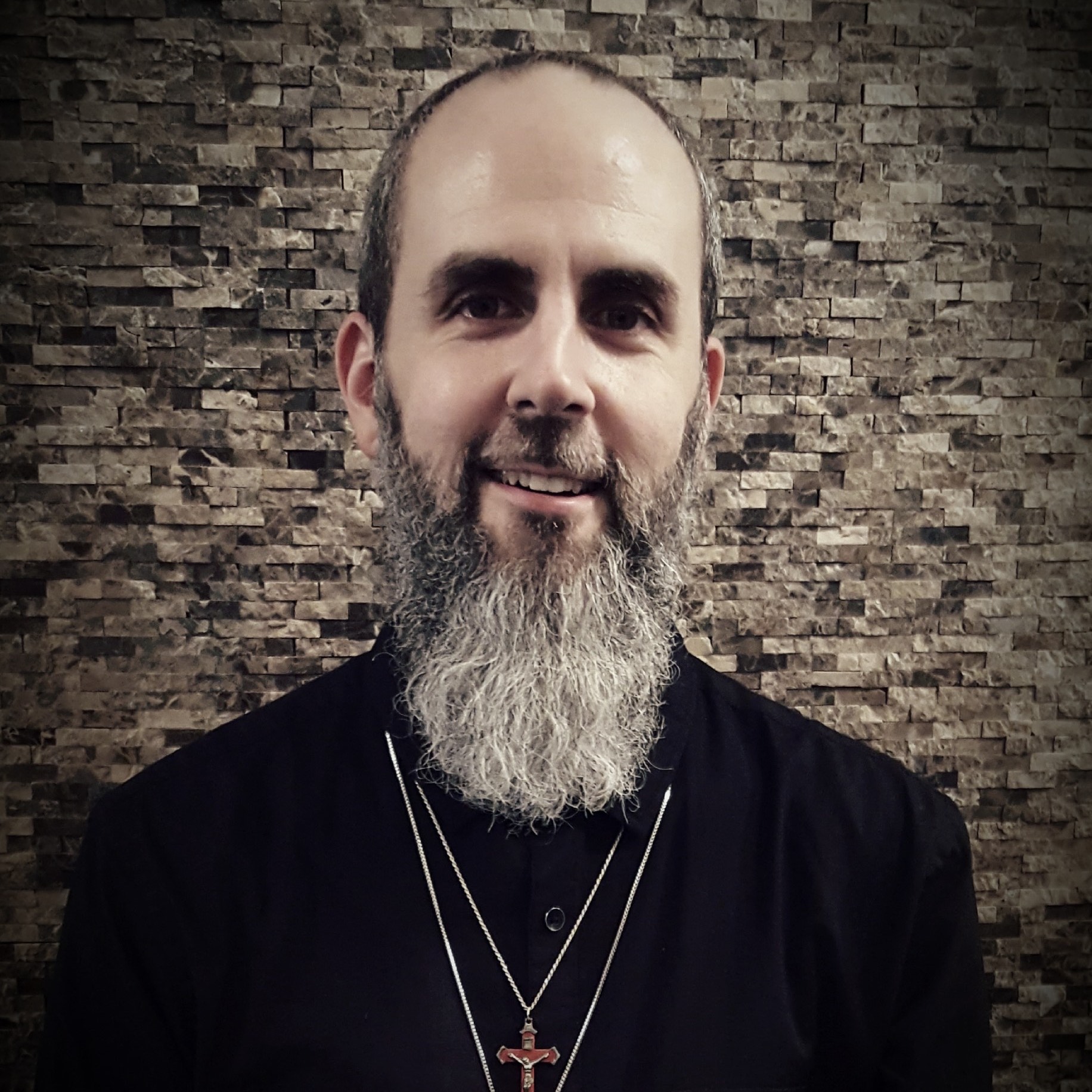
There are two types of martyrs in our holy Catholic Church: white martyrs, who achieve a “bloodless” martyrdom through a heroic life of self-denial, ascetical practices, and daily sacrifice for Christ; and red martyrs, those who are killed for their faith in Christ. St. Charles Lwanga and his companions, whose feast day is June 3rd, are red martyrs. They are patron saints of those served by the Courage apostolate, who are called to white martyrdom by striving to live according to the Church’s teachings regarding same-sex attraction.
The inspiration we need to live out white martyrdom comes, in part, from bishops, priests, and deacons speaking clearly about the specific reasons for St. Charles and his companions’ martyrdom, rather than referring to them as general martyrs for the Faith.
St. Charles Lwanga and his companions stand out in the Church’s history of martyrs due to the unique and specific reason for their sacrifice. Unlike others, their martyrdom was not merely for general chastity but for resisting a particular demand placed upon them. This distinction is especially relevant in June, observed as the month for celebrating the very behavior they opposed. According to the Courage International website (couragerc.org),
St. Charles Lwanga was one among 22 young African men who were martyred in the 1880s in Uganda. These young men were, in various ways, in service to the King and were evangelized by the local French missionaries. They were baptized and instructed by the local French priests and resisted the King’s request that they engage in homosexual acts in his court. The King’s anger at their refusal led him to kill the French missionaries and many of the young Catholic boys of his court. St. Charles Lwanga was the first to be burned alive, and many other young men followed his martyrdom through various forms of torture and death. Only two bodies could be identified, those of St. Charles Lwanga and St. Mathias Malumba. All twenty-two men were canonized by Pope Paul VI in 1963 and today are a great example to Courage members, inspiring them to continue in their pursuit of chastity and holiness.
I’ve been back in the Catholic Church for over thirteen years. I’ve heard many homilies about the Ugandan martyrs, yet none specifically mentioned the reason for their martyrdom. Why is that?
St. Peter Damian was fearless. In The Book of Gomorrah, he wrote about the evils of homosexual activity in the clergy and religious orders. In The Dialogue of St. Catherine of Siena, she wrote,
They not only fail to bridge this fragility…but they do worse, committing that accursed sin against nature. Like the blind and stupid, with the light of their intellect extinguished, they do not perceive the stench and misery in which they are…
This passage is written as the direct voice of God, speaking to her regarding the sinfulness of homosexual activity.These saints had no evident fear of repercussions for speaking the truth about these behaviors. If they did fear, they did not let it stifle them. They spoke openly, boldly, and, in the case of St. Peter, graphically. I’m sure they both knew their words could cause emotional pain for those experiencing these desires. Still, they valued salvation over comfort.
What has changed since the times of these outspoken Saints and Doctors of the Church? Why do we no longer speak boldly about the wickedness and destructive power of homosexual acts? Why do our leaders not take the opportunity at the start of “Pride Month” to promote these saints?
Pride and fear, I believe, are at the root of much silence on this topic. Many in the Church act as though they know better than the Church’s traditional understanding of Scripture and her Doctors. Instead of proclaiming God’s freeing and salvific Word, many leaders become subservient to the prevailing spirit of the age under the false guise of mercy and compassion.
I lived this false identity for much of my life; and I still struggle with the behaviors associated with it, partly because those who knew better never spoke the difficult truth candidly. While they stayed silent, I was led to believe my desires defined me. This silence allowed confusion and pain to multiply.
The ongoing silence of Church leaders directly contributes to this identity crisis. We need our leaders to break this silence and speak clearly and compassionately, especially during “Pride” month. St. Charles provides an ideal opportunity to do so.
June 3rd is the timely feast day of these inspirational men and boys. They were burned alive and beheaded because the potential pleasures of homosexual activity and the power that could have come from giving in to the king’s advances were not worth separating themselves from Christ. They took seriously 1 Corinthians 6:9:
Do you not know that the unrighteous will not inherit the kingdom of God? Do not be deceived; neither the sexually immoral, nor idolaters, nor adulterers, nor men who practice homosexuality, nor thieves, nor the greedy, nor drunkards, nor revilers, nor swindlers will inherit the kingdom of God.
These martyrs didn’t do what would have been easier, which would have been to give in, thereby avoiding the suffering their resistance would lead to. They died painful deaths rather than engage in behavior they knew to be evil. They didn’t shop around to find a priest who would tell them to do what was easier. They did what they knew was good. They had strong Catholics around them to encourage them to suffer for what was right. We need the same, even more so now.
Each June 3rd, I hope for a homily that tells the specific truth about what these men died for. Their sacrifice should be held up as an example for everyone of how to respond to disordered desires. Yet, year after year, I am let down by priests who, despite their orthodoxy, stay silent rather than share the full, difficult truth.
Each June 3rd, I hope for a homily that tells the specific truth about what these men died for…Yet, year after year, I am let down by priests who, despite their orthodoxy, stay silent rather than share the full, difficult truth.Tweet ThisSome claim caution is to prevent scandalizing the young, but today’s youth are already exposed to the world’s teachings on these issues everywhere they turn. By remaining silent, priests shield no one—they only allow a false understanding of what it means to welcome and be compassionate to take root, leading people away from Truth. Courage and transparency about these martyrs’ stories are necessary—now more than ever.
So, I plead with priests of Christ’s holy Catholic Church: be the leaders and fathers we need. Do not remain silent—raise your voices and speak forthrightly about these moral truths. We need to hear the truth about what inspires real courage—knowing that there are those who would rather die for Christ than betray His commands. Without such clarity, many of us fall into the false identity traps set by both the culture and some in the Church.
As Fr. Matthew Kauth says in his book The Imitation of Saint Joseph,
The Israelites considered themselves chosen and loved by God precisely because He gave them the law. Why? Because it is a sharing of His mind. What pleases Him? What is good for us, His creatures? “Teach me your way, O LORD, that I may walk in your truth” (Ps. 86:11). And He did.
Jesus’ commandments are not burdens; they are sources of freedom. The teachings regarding homosexuality must not be presented as mere rules or burdens but as liberating truths that reveal God’s desires for our good—truths that are worth fighting and dying for.
Priests and Church leaders: now is the time to lead with conviction, clarity, and compassion. Bold, clear shepherding on these specific truths brings life, not bondage.
In the same book, Fr. Kauth states,
No doubt the first thing one is struck by in David is confidence. The apostles were given such confidence after the descent of the Holy Spirit (see Acts 4:13). What is the source of such confidence? The word itself, parrhesia in Greek, denotes a certain boldness in speech even at the risk of losing one’s life. It is both to know and to speak the truth for the good of the other, the common good, even if this results in the loss of your ability to speak. This is what fueled all of the martyrs.
This boldness epitomizes the martyrs’ spirit, and it is what the Church needs from her leaders now: white martyr priests to inspire white martyr, and possibly red martyr, laity. Only by embracing and proclaiming hard truths can priests and bishops truly shepherd their flocks. Speaking the truth, even when it’s difficult, is what liberates us, as St. Charles and his companions teach us through their martyrdom.
St. Charles Lwanga and Companions, please pray for us.
“Why do we no longer speak boldly about the wickedness and destructive power of homosexual acts?”
The answer is obvious: because of the high number of homosexuals infecting the clergy and trying to normalize homosexuality.
The most outrageous example is the recent Synod Report No. 9 coming out of the Vatican filled with such blatant heresy as “sin, at its root, does not consist in the (same-sex) couple relationship, but in a lack of faith in a God who desires our fulfilment.”
Then we have Pope Leo recently lamenting there are more important issues than sexual morality, such as “justice, equality, freedom of men and women, freedom of religion.”
But there is no assault from within the Church against “justice, equality, freedom of men and women, freedom of religion.”
But there IS a grave assault from within the Church on sexual morality as shown by Synod Report No. 9.
Homosexual sin—one of the 4 sins that cry out to heaven for vengeance—is polluting the clergy, doing untold spiritual harm, costing the Church millions of dollars, bankrupting dioceses, and sullying the Church’s reputation.
Our Lady of Fatima told the children that more people go to hell because of sins against the flesh than for any other reason.
But tragically, Pope Leo and high Vatican officials seem to be turning a blind eye to the wreckage that sexual sin—especially homosexual sin– is doing to both the Church and individual souls.
Wikipedia gives the explanation for the martyrdom of St. Charles Lwanga: “The fury of the king was particularly inflamed against the Christians because they adamantly refused to participate in sexual acts with him.”. What sexual acts? Article, not surprisingly, does not say.