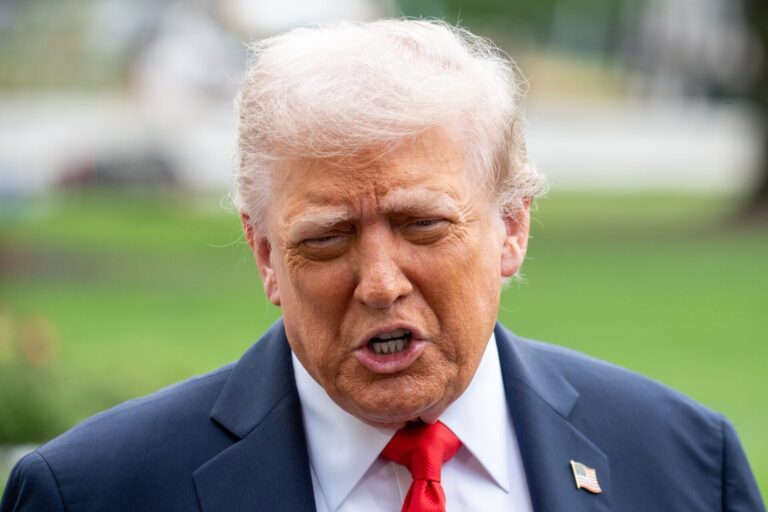
There Is No Such Thing As An “Affordability President”
President Trump promises to be the “affordability president.” The problem is that he—like presidents before him—won’t address the root cause of rising prices.


President Trump promises to be the “affordability president.” The problem is that he—like presidents before him—won’t address the root cause of rising prices.
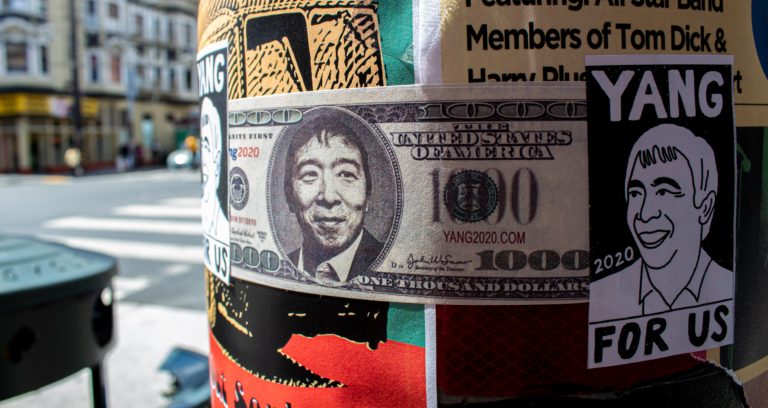
Andrew Yang is a man ahead of his time. Mark my words: within our lifetime, his ominous-sounding “Freedom Dividend—basically a universal basic income, or UBI—will become a plank of at least one of our two major political parties. And how could it be otherwise? Mr. Yang argues (correctly) that the developed world is going through … Read more
Economists and pundits alike are going wild over the United Kingdom’s recent “double dip” recession. The 2008-09 recession prompted the election of a conservative coalition led by Prime Minister David Cameron. Cameron decided the best path for economic recovery was “austerity,” a program of reduced government spending and smaller government debt. The new coalition—with the … Read more
I am a long-time reader and admirer of the work of Wendell Berry. On April 23, I was privileged to be among those in attendance at the Kennedy Center to hear his 2012 Jefferson Lecture. With Berry nearing the end of his career, I had not expected to hear anything particularly new from him that … Read more
Chances are, you’ve heard economics referred to as “the dismal science.” That unflattering description is glib and catchy; it is also 100 percent wrong. Let me set the record straight and explain why economics—far from being dismal—is cause for hope, joy, cheer, and optimism. Thomas Carlyle, a 19th-century Scottish essayist, coined the phrase “the dismal … Read more
Let’s think about the kind of mess that we’re in. Federal 2010 Medicare and Medicaid expenditures totaled $800 billion. The projected annual growth of both programs is about 7 percent. Social Security expenditures are more than $700 billion a year. According to the 2009 Social Security and Medicare trustees reports, by 2030, 49 percent of … Read more
“I don’t think Ron Paul represents the mainstream,” says Mitt Romney. Newt Gingrich, another of the Texas congressman’s opponents in the contest for the Republican presidential nomination, uses stronger terms, declaring, “Ron Paul’s views are totally outside the mainstream of virtually every decent American.” As the results in Iowa suggest, the “mainstream” to which … Read more
Few will mourn the passing of 2011 into the financial history books. From an apparent economic recovery at year end 2010 and high optimism in the financial markets, a succession of natural disasters, economic disappointments, and government failures led to the most volatile year in stock market history. Today there is broad skepticism that the … Read more
This book review first appeared in the June 1999 edition of Crisis Magazine. It continues yesterday’s symposium on the “bourgeois spirit.” See also Christopher Dawson’s essay, Catholicism and the Bourgeois Mind, Jeffrey Tucker’s reply, In Defense of Bourgeois Civilization, Gerard Russello’s account of Dawson’s contribution, and Crisis editor John Zmirak’s essay, Say It Loud: Bourgeois … Read more
This month, communist China is celebrating its 10th anniversary of joining the World Trade Organization. The subtitle ought to be China’s 10th anniversary of cheating the United States. The globalists talked the U.S. into supporting this cozy trade relationship with China by getting American manufacturers and farmers to salivate at the prospect of gaining … Read more
Washington gridlock may turn out to be the salvation of the Obama administration. Not only does gridlock allow the president to blame Republicans for not solving the financial crisis that his own runaway spending created, the inability to carry out as much government intervention in the economy as when the Democrats controlled both Houses … Read more
The United Nations Climate Change Conference in Durban, South Africa, opening on Nov. 28, called COP-17, is one of a series of U.N. meetings working toward a specific goal. Advertising for this meeting features a long list of invited celebrities including Angelina Jolie, U2’s Bono, Ted Turner, Arnold Schwarzenegger, Al Gore and Michael Bloomberg. … Read more
As we all learned in grammar school, we’re coming up on the day when we show our gratitude for all the blessings God has showered upon our country. If we had good teachers, we learned to think of more than just the natural resources and easily conquered lands, and more than a blandly defined “democracy.” … Read more
Alice in Wonderland was written by a professor who also wrote a book on symbolic logic. So it is not surprising that Alice encountered not only strange behavior in Wonderland, but also strange and illogical reasoning — of a sort too often found in the real world, and which a logician would be very … Read more
“It’s the economy, stupid,” some dude named Carville once said. He was referring to what was the correct prescription for winning a presidential election — and it’s been gospel ever since. He’s probably right. Except when it comes to actually being president, it’s something else altogether. “It’s the foreign policy, stupid” — because day one … Read more
Justice Oliver Wendell Holmes said that a good catch phrase could stop thinking for 50 years. One of the often-repeated catch phrases of our time — “It’s the economy, stupid!” — has already stopped thinking in some quarters for a couple of decades. There is no question that the state of the economy can … Read more
Predicting the future is a tricky business but that does not stop people from trying, economists in particular. While skilled at dissecting the current state of affairs, they are fallible when predicting where it will lead. The year now ending is a good example. It began on a note of high optimism after an … Read more
If you want to know what motivates the people involved in Occupy Wall Street, you can get a good idea from Think Progress, a left-leaning website. It offers a map of the continental United States labeled, “If U.S. land were divided like U.S. wealth.” In this representation, 1 percent of the people hold title … Read more
Do we need a supranational authority to enforce social justice? The Vatican’s Pontifical Council for Justice and Peace (PJCP) seems to think so. Its new document, “Towards Reforming the International Financial and Monetary Systems in the Context of a Global Public Authority,” calls for global economic regulation by a supranational body and a central world … Read more
Distributists and followers of the “Austrian school” of free market economics are notoriously at odds with each other over what constitutes a just economic order. We disagree, at times vigorously, on how to structure an economy that best guarantees the rights of the family and that offers the best opportunities for prosperity and liberty. We … Read more