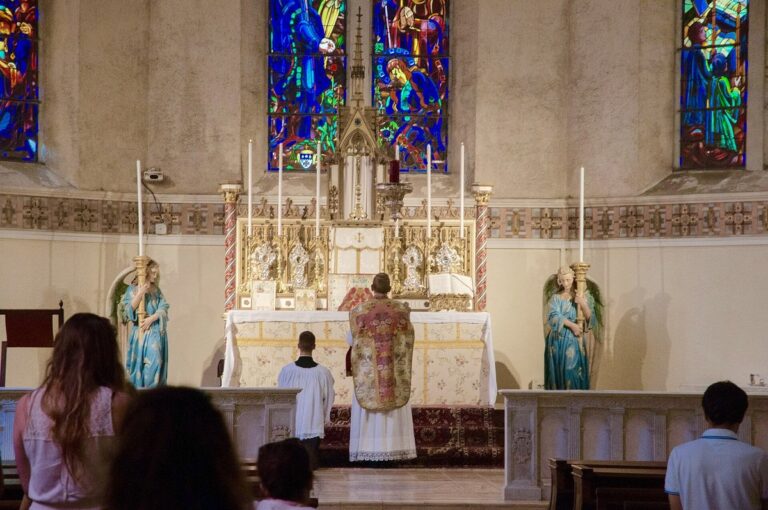
Your Priest Is Not Your Performer
If we treat the priest as our personal performer, we sully his vocation, reduce the sanctuary to a mere stage, and reorient the Mass toward us—both physically and spiritually.


If we treat the priest as our personal performer, we sully his vocation, reduce the sanctuary to a mere stage, and reorient the Mass toward us—both physically and spiritually.
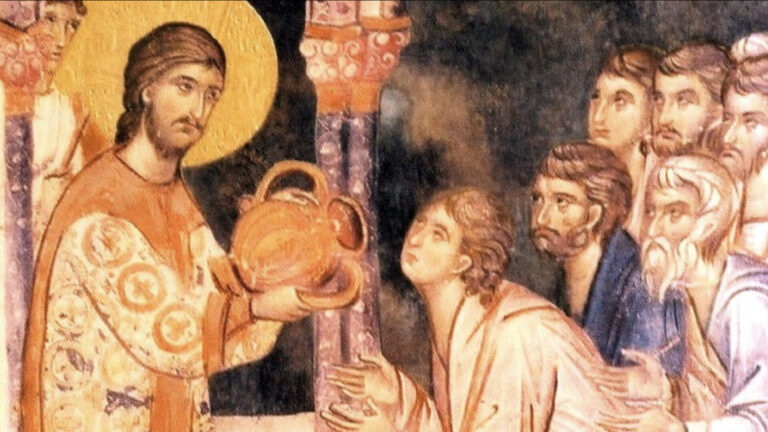
While the claim that the Latin Rite is a deviation from an original Byzantine Rite doesn’t hold up to academic scrutiny, the Novus Ordo is more susceptible to charges of deviation.

The Novus Ordo can be celebrated reverently, but to do so requires a rich interior life of a priest, lest the temptations of the Mass strip him of the august dignity in which he participates.
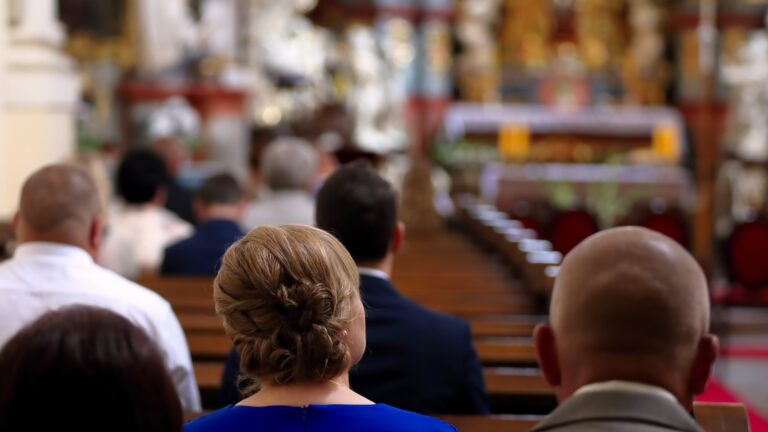
Being able to understand the words of the Mass doesn’t necessarily mean you understand its mystery.

The temptation to see one’s self and our in-group as holier-than-thou is nothing new in the history of the Church.
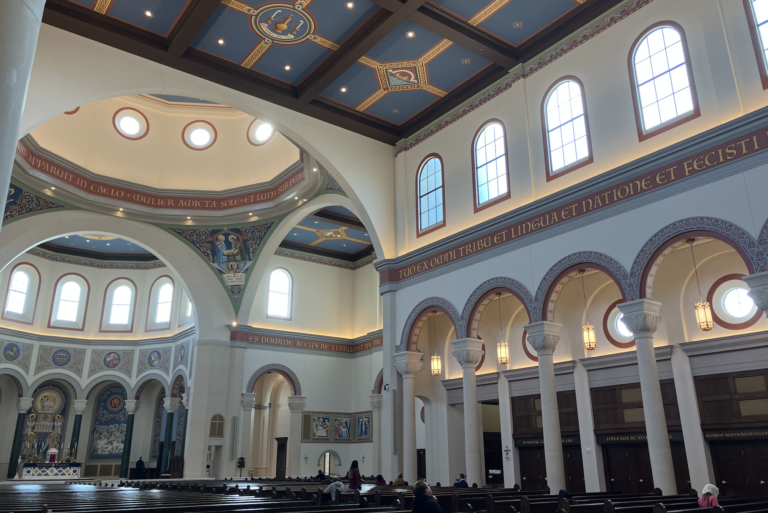
The Latin Mass is an adventure. That’s not what makes it sacred, but it does make it compelling. It’s a secret language waiting to be unlocked.
If priests are not aware of the origins of the new Mass, how can we expect fruitful dialog about the fact that some people prefer the preconciliar Mass to the modern one?
If a liturgical rite can be blamed for the bad theology of some of its attendees, then all rites should be examined to ensure we remove any and all offending liturgies.

This future in which traditional Catholics in their TLM-celebrating churches are separated from the rest of the faithful in diocesan parishes would be immensely harmful for all.
Part Five of a response to Cavadini, Healy, and Weinandy’s critique of the traditional Latin Mass.
Part Four of a response to Cavadini, Healy, and Weinandy’s critique of the traditional Latin Mass.
Part Three of a response to Cavadini, Healy, and Weinandy’s critique of the traditional Latin Mass.
Part Two of a response to Cavadini, Healy, and Weinandy’s critique of the traditional Latin Mass.
Part One of a response to Cavadini, Healy, and Weinandy’s critique of the traditional Latin Mass.
“The Traditional Mass is not a spectator sport.” The statement rings out like a shot in the quiet, muggy, non-descript church. Oscillating fans buzz from various strategic locations. Incense wafts up from the thurible tucked away to the right of the altar. The congregants sit quietly, attentive. The women’s heads are covered, and everyone is … Read more
The translation of the Nicene Creed used at Sunday Mass beginning in Advent will read, “I believe in God, the Father Almighty” — not, as currently, “We believe in God.” Often I say Mass using the Latin Novus Ordo. This is the text that was supposed to be translated into English. The Latin Creed begins … Read more
The spirit of our Catholic liturgy is the spirit of music and song. To give glory and praise to the living God, human speech alone can only take us so far. Words alone can never be enough. We need to pay him homage with songs of joy and with instruments made for praise. St. Augustine … Read more
As the discussion continues to move along in the comments over on my piece about the need for traditional Catholics to show a bit more friendly charity (the horror!) examples have begun to spring up around the Internet showing exactly what I’m talking about. Predictably, one of the very forums I mentioned as an example … Read more
One of the obstacles to a wider acceptance of the extraordinary form of the Roman Rite, as well as a more reverent celebration of the ordinary form, is an enduring misunderstanding of the concept of active participation. Earlier this summer, Bishop Kevin Dowling of Rustenburg, South Africa, criticized Popes John Paul II and Benedict XVI … Read more
My former editor at the National Catholic Register, Tom Hoopes, has done me a courtesy rarely afforded tradition-minded Catholics: He has stooped to address my arguments, instead of airily dismissing them as the sad obsessions of half-wits, bag ladies, and yellow-eyed anti-Semites with dirty fingernails. Sure, he did so in a blog post which referred … Read more