Dunbar’s Number and the Mission of the Laity
A priest can’t personally shepherd thousands of parishioners—Dunbar’s Number explains why. The laity must help in the mission of saving souls.


A priest can’t personally shepherd thousands of parishioners—Dunbar’s Number explains why. The laity must help in the mission of saving souls.
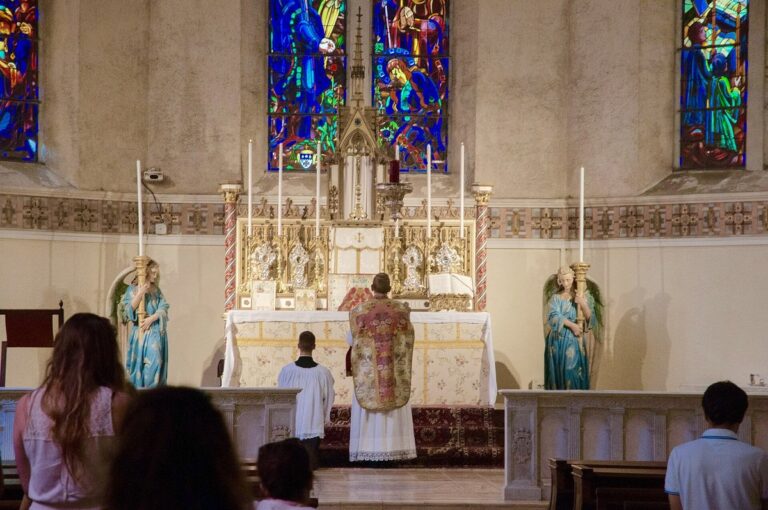
If we treat the priest as our personal performer, we sully his vocation, reduce the sanctuary to a mere stage, and reorient the Mass toward us—both physically and spiritually.
We don’t need to know why Fr. Chad Ripperger was asked to step out of the limelight. But today’s cult of celebrity exorcists feeds an unhealthy curiosity about the demonic, and any good priest should want to live his vocation in hiddenness.
Whether girls should be altar servers is a debate that has become a luxury, while vocations are a necessity. The answer to both the vocations crisis and the crisis of fatherhood is the same: fathers serving at the altar with their sons.
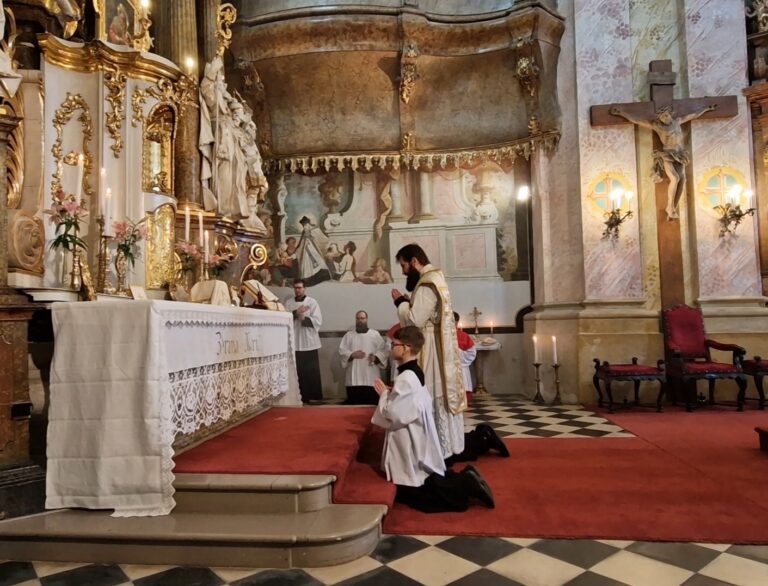
I caution anyone to consider carefully the claim that the active priesthood of the Novus Ordo is more important than the more targeted work of the SSPX.

At his ordination, a priest becomes a new creation, bearing supernatural powers that alone can tame the beasts of a godless age.

If bishops and priests were treated like rooted, stable shepherds of one particular flock, rather than middle management who may be promoted for good behavior, perhaps we would see a serious shift in saintly, courageous behavior.

Watching a man say yes to the call of the priesthood is always stirring. It is all the more so in a diocese plagued by uncertainty and in which personal piety and reverence are discouraged or outright sneered at.

Day in and day out, there are the faithful, quiet priests—who pray their breviary and their Rosary, anoint the dying, celebrate Mass, hear confessions, and bury the dead—whose lives we don’t know.

The distinct nature of the priesthood derived from Holy Orders is baked into the language of the “Orate Fratres.” Flattening the ordained priesthood into “the common priesthood of the faithful,” only distorts both.

Bishop Martin of Charlotte is seeking to impose ‘a year as a layman’ before priestly ordination. This is like an engaged man living an additional year as a bachelor before his wedding day.

The modern priesthood is a lonely place, often little support. Spelling out ways for priests to safely reach out to their bishops early, when they are struggling, may save many from tumbling further.

A type of bishopric anti-fatherhood has led countless priests in America to live out vocations tainted by fear, torment, and silent despair.

Fr. Michael Champagne grew up sweating it out alongside French-speaking tough Cajuns who memorialized their Acadian forebears through the grind of raw Catholic lives.

The priest as clown is worse than a heretic who leads God’s people along the wrong path. The clown priest leads God’s people into not regarding God at all—a spiritual shrug and disinterested blasphemy.

If parishes are giving better catechesis and liturgy, emphasizing Confession, and building devotion to the Eucharist and the Blessed Virgin Mary, shouldn’t they be seeing more fruit?

Knowing he could not simply keep doing what had been done, a young priest tried something different: an imitation of something old.

A perfect metaphor for the classical priest is Hercules. Sadly, the Modern priest happily sees himself as Shirley Temple, steering not the mighty Barque of Peter but the Good Ship Lollipop.

We hear too often about priests who leave ministry. But it’s instructive to learn about a priest who considered leaving but didn’t: Fr. Bud Kieser.

Fathers, please preach boldly about sin and demand excellence in the spiritual life.